
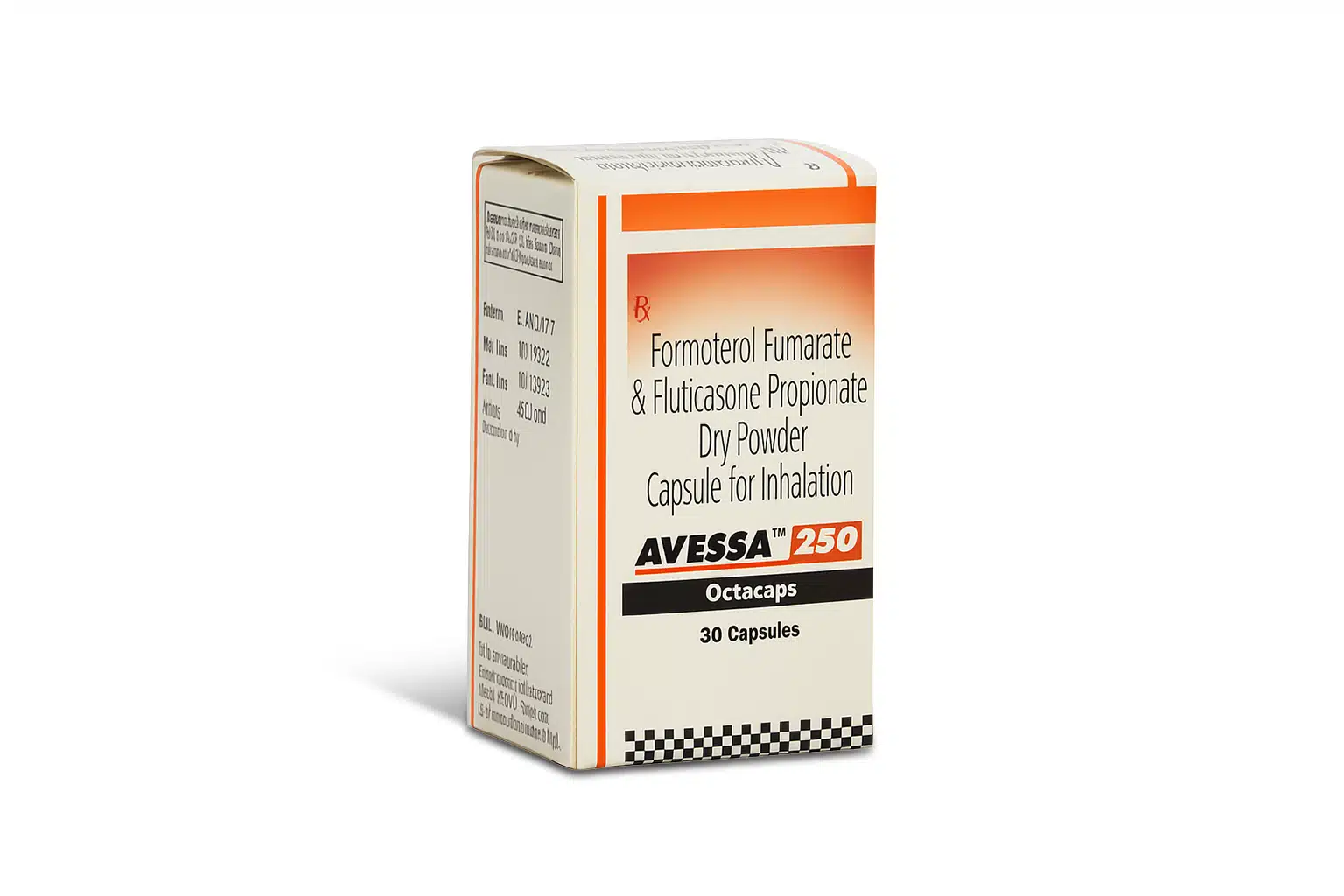
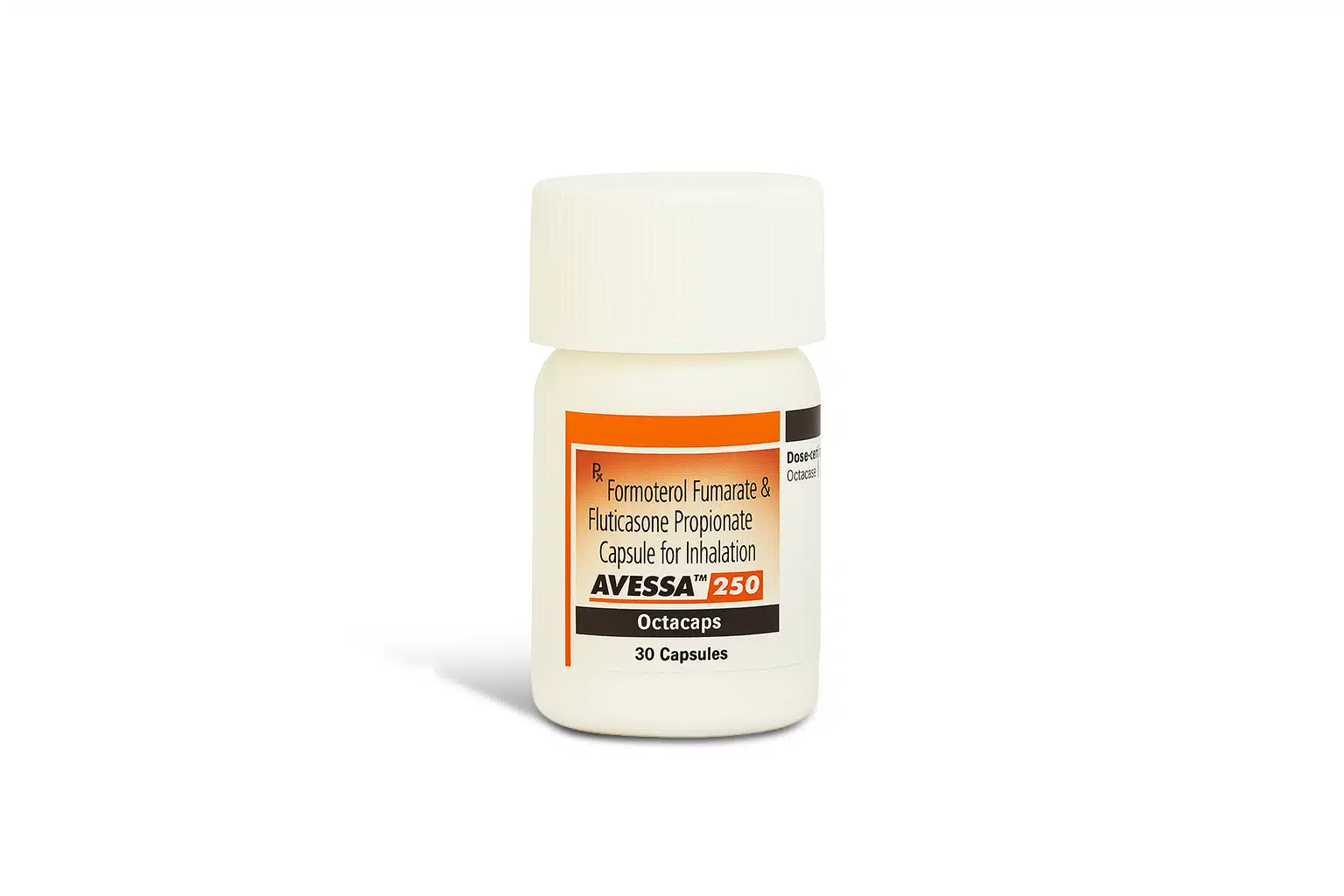
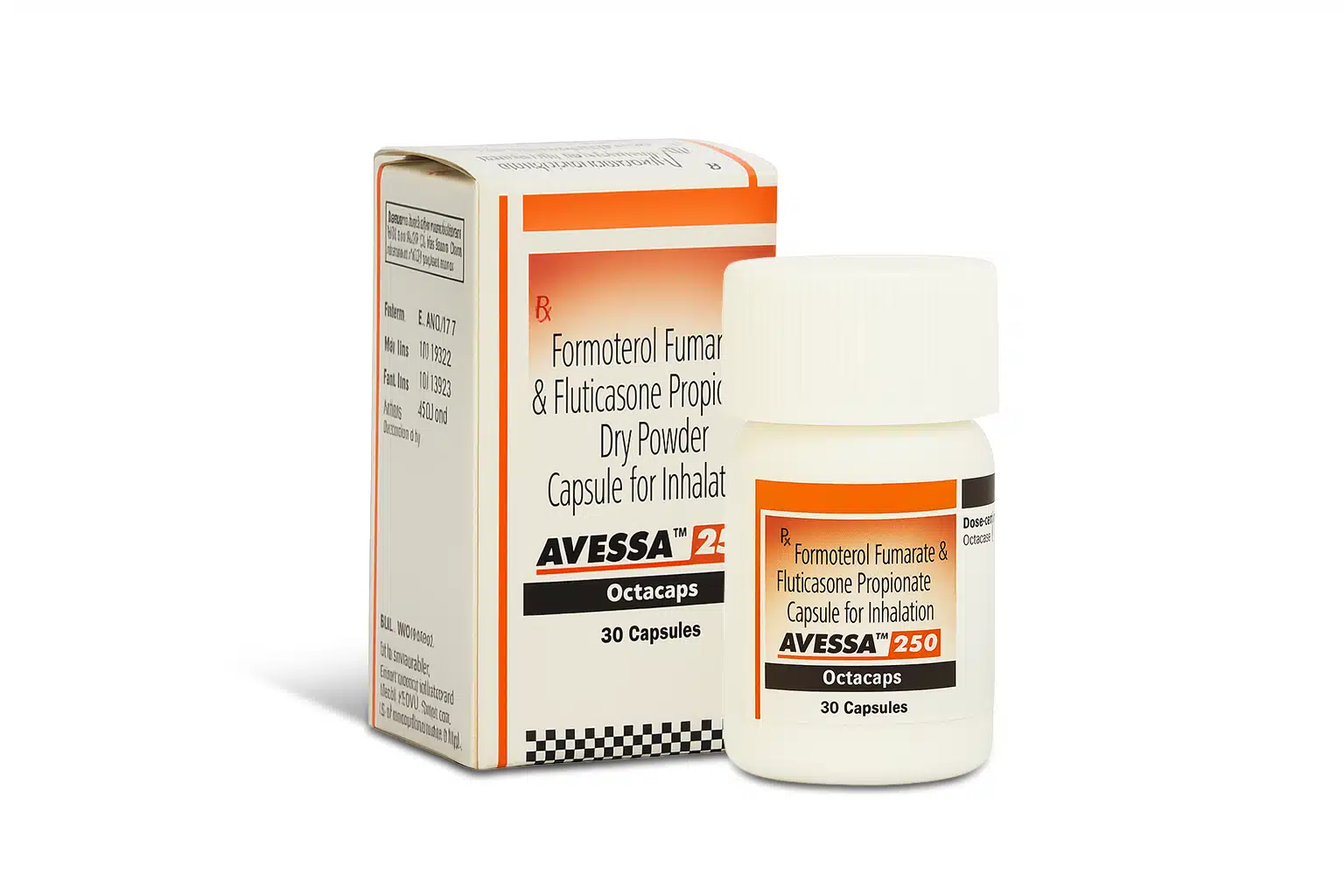
Avessa 250 Inhaler is a combination pressurised metered‑dose inhaler (MDI) delivering Fluticasone propionate 250 mcg and Formoterol fumarate 6 mcg per actuation. It uses the CFC‑free propellant HFA‑134a and comes in a canister fitted with a plastic actuator and mouthpiece.
Key Features
| About Avessa 250 Inhaler | |
|---|---|
| Drug Class | Respiratory agents |
| Subclass | Inhaled corticosteroid (ICS) + long-acting beta2-agonist (LABA) combo |
| Product Details | |
|---|---|
| Composition | Active ingredients:
Inactive ingredients:
|
| Packaging Type | Metered-Dose Inhaler (MDI) |
| Pack Size | 120 metered actuations (puffs) per inhaler |
| Dosage | 1 puff (250/6 mcg) twice a day |
| Therapeutic Class | Anti-asthmatic, COPD management |
| Action Class | Bronchodilator (LABA) + Anti-inflammatory (Corticosteroid) |
| Chemical Class | Fluticasone Propionate and Formoterol Fumarate |
| Manufacturer | Sun Pharmaceutical Industries Ltd (India) |
| Shelf Life | 2–3 years from the date of manufacturing |
| Usages | Treatment of asthma and Chronic Obstructive Pulmonary Disease (COPD) symptom. |
| Country of Origin | India |
| Storage | Store at room temperature (20°C–30°C) in a cool and dry place, protected from direct sunlight, moisture, and heat. |
How does Avessa 250 Inhaler?
- Decreases inflammation in the airways: Fluticasone propionate is a corticosteroid that decreases inflammation, swelling, and irritation in the lungs, thereby making breathing easier and avoiding asthma attacks.
- Relaxation of airway muscles: Formoterol fumarate is a long-acting β2-agonist (LABA), so it relaxes the smooth muscles surrounding the bronchial tubes, keeping airways open for a longer period of time and improving airflow.
- Dual-action mechanism: Both these active ingredients act together to provide immediate and long-term relief. Fluticasone controls inflammation, while Formoterol keeps the airways open for longer, thus sustaining respiratory comfort in asthma and COPD patients.
Dosage
- The usual recommended dosage is one or two inhalations twice daily, preferably once in the morning and once in the evening.
- The dosage may vary according to the severity of the condition and the age of the patient.
- Consult your doctor before starting or adjusting the dose to ensure safe and effective use.
Uses
- Asthma: Controls and prevents the symptoms of asthma such as wheezing, shortness of breath, and chest tightness.
- Chronic Obstructive Pulmonary Disease (COPD): Used for long-term maintenance treatment to prevent flare-ups and maintain lung function.
- Prevention of Bronchospasm: Reduces the frequency of sudden breathlessness in chronic respiratory patients.
Side Effects
- Headache
- Throat irritation or hoarseness
- Cough or dry mouth
- Oral fungal infections (thrush)
- Trembling or shakiness; nervousness
- Nausea
- Palpitations, or increased heart rate
Interactions
- Avessa 250 Inhaler may interact with the following medicines and substances:
- Beta-blockers (e.g., Propranolol): These can decrease the effect of formoterol and induce difficulty in breathing.
- Diuretics-for instance, Furosemide: This may increase the risk of a low potassium level, causing muscle cramps or irregular heartbeat.
- Antifungal and antiviral drugs-e.g., Ketoconazole, Ritonavir: Can increase the systemic exposure to corticosteroids, thus increasing the probability of adverse drug reactions.
- MAO inhibitors: Concomitant use may enhance hypertensive effects, for example, with Phenelzine.
- CYP3A4 inhibitors: May increase the levels of Fluticasone in the body, thereby increasing the risk of adrenal suppression.
Pharmacokinetics
- Absorption: Both Fluticasone and Formoterol are absorbed through the lungs upon inhalation, with a local effect and minimal systemic exposure.
- Distribution: They are extensively bound to plasma proteins and are mainly distributed in lung tissues.
- Metabolism: Fluticasone is metabolized mainly via the liver enzyme CYP3A4; formoterol also undergoes extensive hepatic metabolism.
- Elimination: Both compounds are primarily excreted by the urine and feces with very minimal accumulation on regular dosing.
Precautions
- Allergies: Do not take if you have an allergy to Fluticasone, Formoterol, or any of the inactive ingredients of the inhaler.
- Cardiovascular conditions: Use with caution in patients with hypertension, arrhythmias, or ischemic heart disease.
- Infections: Long-term corticosteroid treatment can suppress the immune system-avoid exposure to infection, especially chickenpox or measles.
- Diabetes: May increase blood sugar levels. Monitor regularly if you have diabetes.
- Thyroid disorders: This inhaler should be used by hyperthyroid patients under strict medical supervision.
Conclusion
Avessa 250 Inhaler provides an effective dual-action therapy for the maintenance and treatment of asthma and COPD due to its unique combination of Fluticasone propionate and Formoterol fumarate. The medication exerts both anti-inflammatory and bronchodilatory effects on the airways, which eases breathing and improves lung function. However, like any medicine, dosage as prescribed, proper inhalation technique, and consult with your health provider before commencing or altering the treatment. Proper use can significantly reduce the frequency of asthma attacks, prevent COPD exacerbation, and improves overall respiratory health.
References
https://pubmed.ncbi.nlm.nih.gov/23273163/
https://clinicaltrials.gov/study/NCT01393145
Abigail Lewis –
Pretty effective. Helps me keep asthma flare-ups in check