
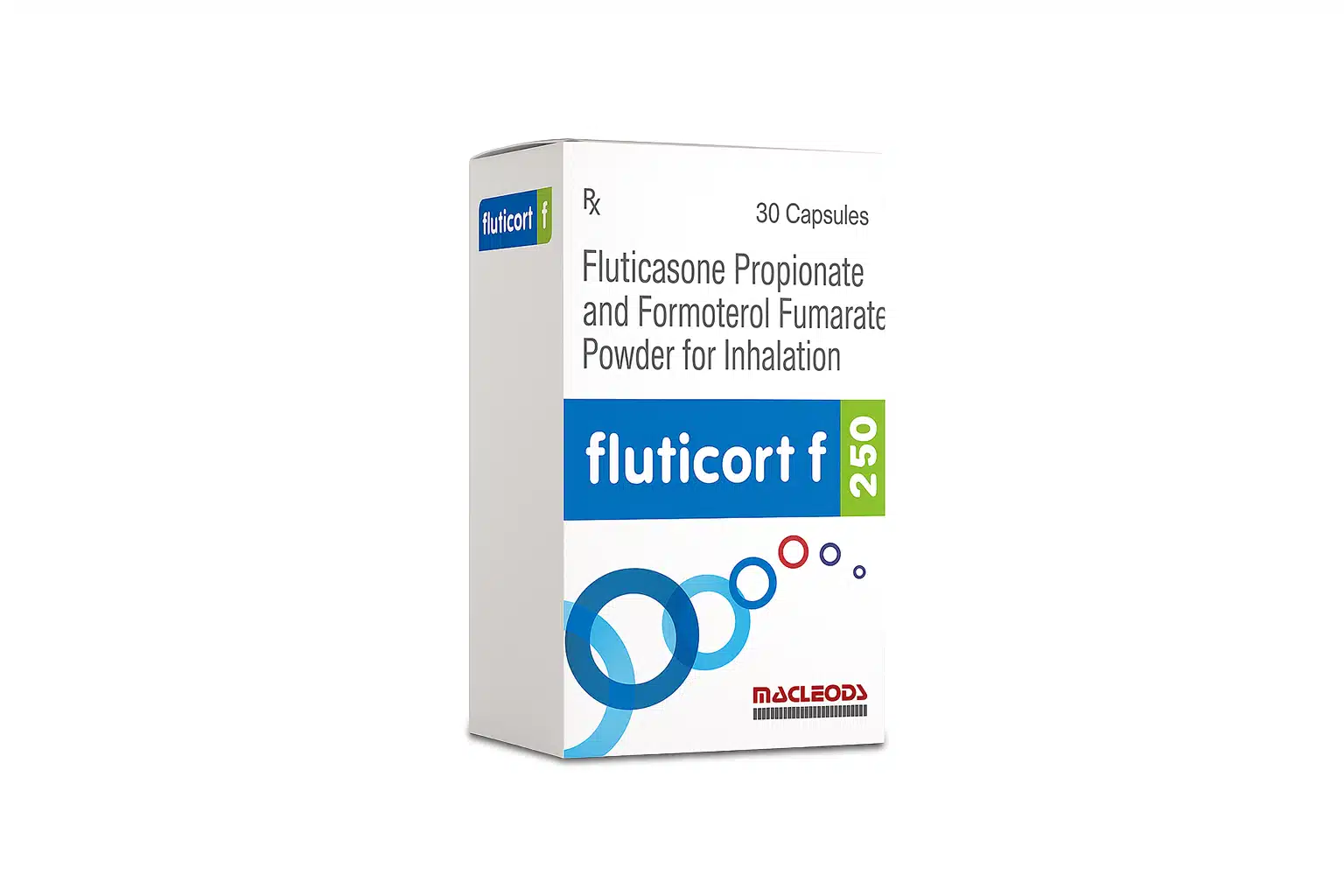

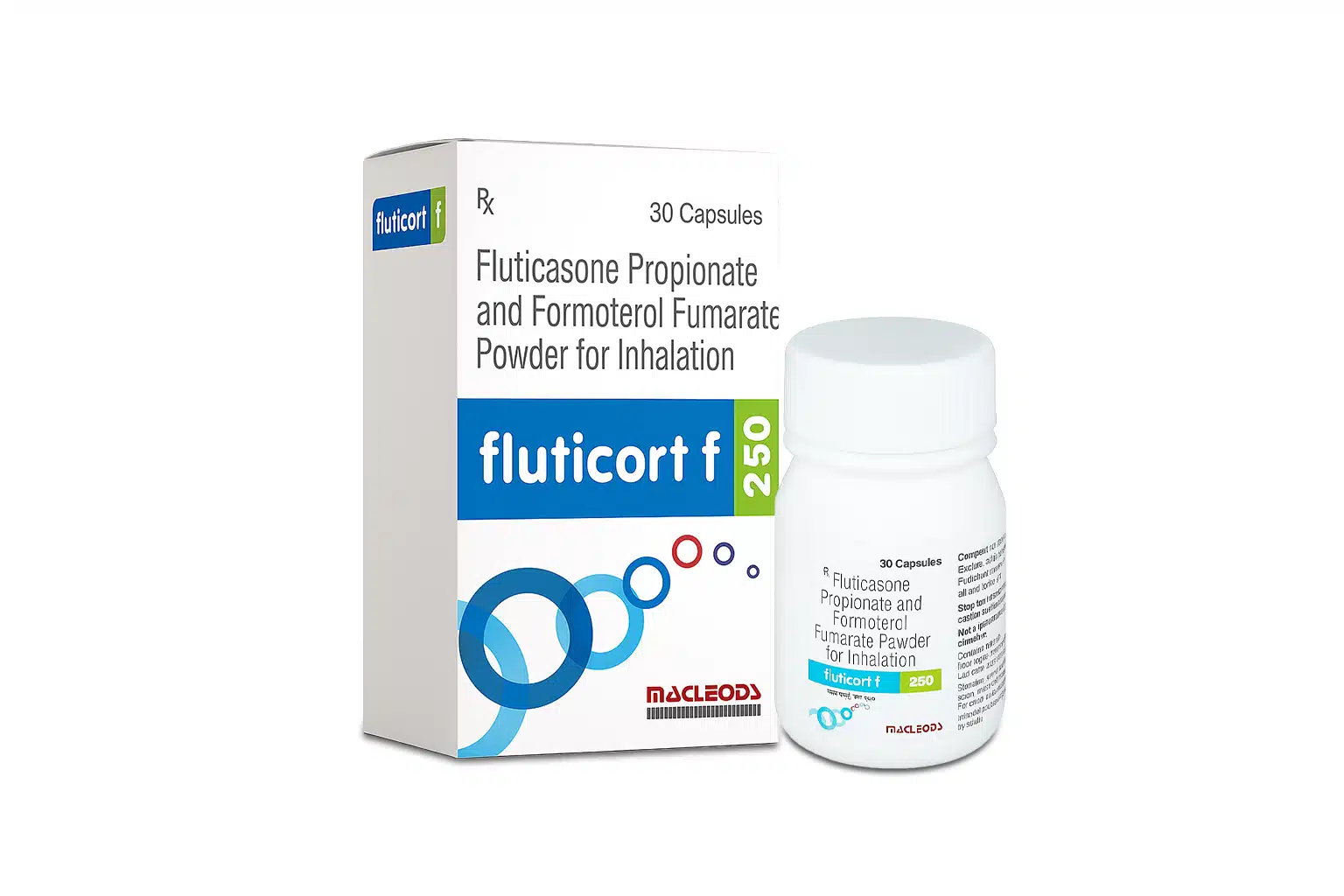
Fluticort F 6 mcg + 250 mcg Inhaler is a medication designed to help manage and prevent symptoms of asthma and chronic obstructive pulmonary disease (COPD), conditions that make breathing difficult due to airway inflammation and constriction.
This inhaler combines two active pharmaceutical ingredients: Formoterol (6 mcg) and Fluticasone Propionate (250 mcg). Formoterol is a long-acting bronchodilator that works by relaxing the airway muscles, making it easier to breathe. Fluticasone Propionate, on the other hand, is a corticosteroid that reduces inflammation and swelling in the lungs, preventing asthma attacks and flare-ups.
Together, these ingredients in Fluticort F Inhaler provide dual action quick relief and long-term control, helping improve airflow, ease breathing, and enhance overall respiratory health when used regularly as prescribed.
Key Features
| About | |
|---|---|
| Drug Class | Corticosteroid + Long-acting beta-agonist (LABA) |
| Subclass | Bronchodilators |
| Product Details | |
|---|---|
| Composition | Active ingredients: Formoterol (6 mcg), Fluticasone (250 mcg) |
| Packaging Type | Metered Dose Inhaler |
| Pack Size | 120 MDI in a box |
| Dosage | 2 Puffs, twice a day, as directed by your doctor |
| Therapeutic class | Respiratory |
| Action Class | Bronchodilator and anti-inflammatory |
| Chemical class | Formoterol and Fluticasone |
| Manufacturer | Macleods Pharmaceuticals Pvt Ltd |
| Shelf Life | 2-3 years from the date of manufacturing |
| Usages | Treatment of Asthma and Chronic obstructive pulmonary disease |
| Country of Origin | India |
| Storage | Store at room temperature 30°C away from direct sunlight and heat |
How does Fluticort F 6 mcg + 250 mcg Inhaler work?
- Reduces inflammation in the airways:
Fluticasone propionate, a corticosteroid, works by decreasing inflammation, swelling, and irritation in the lungs. This helps to make breathing easier and prevents asthma attacks. - Relaxes airway muscles:
Formoterol fumarate, a long-acting β2-agonist (LABA), relaxes the smooth muscles in the bronchial tubes, allowing the airways to stay open for a longer period and improving airflow. - Dual-action mechanism:
The combination of these two active ingredients provides both immediate and long-term relief. Fluticasone controls inflammation, while Formoterol maintains open airways, offering sustained respiratory comfort for asthma and COPD patients.
Dosage
- The usual recommended dose is one or two inhalations twice daily, preferably once in the morning and once in the evening.
- Dosage may vary depending on the severity of the condition and the patient’s age.
- Consult your doctor before starting or adjusting the dose to ensure safe and effective use.
Uses
- Asthma: Helps in controlling and preventing symptoms such as shortness of breath, wheezing, and chest tightness.
- Chronic Obstructive Pulmonary Disease (COPD): Used for long-term maintenance treatment to prevent flare-ups and maintain lung function.
- Bronchospasm prevention: Helps reduce the frequency of sudden breathing difficulties in chronic respiratory patients.
Side Effects
Common side effects may include:
- Headache
- Throat irritation or hoarseness
- Cough or dry mouth
- Oral fungal infections (thrush)
- Tremors or nervousness
- Nausea
- Palpitations or increased heart rate
Note: Rinse your mouth with water after every use to prevent oral infections caused by corticosteroid buildup.
Interactions
Fluticort F Inhaler may interact with certain medications and substances:
- Beta-blockers (e.g., Propranolol): May reduce the effectiveness of Formoterol and cause breathing difficulties.
- Diuretics (e.g., Furosemide): Can increase the risk of low potassium levels, leading to muscle cramps or irregular heartbeat.
- Antifungal and antiviral drugs (e.g., Ketoconazole, Ritonavir): May increase systemic corticosteroid exposure, raising the risk of side effects.
- MAO inhibitors (e.g., Phenelzine): Can intensify cardiovascular side effects like high blood pressure.
- CYP3A4 inhibitors: May increase Fluticasone levels in the body, heightening the chance of adrenal suppression.
Always inform your healthcare provider about all medicines and supplements you’re currently taking.
Pharmacokinetics
- Absorption: Both Fluticasone and Formoterol are absorbed through the lungs after inhalation, providing a local effect with minimal systemic exposure.
- Distribution: They bind extensively to plasma proteins and distribute primarily to lung tissues.
- Metabolism: Fluticasone is metabolized mainly by the liver enzyme CYP3A4; Formoterol undergoes extensive hepatic metabolism as well.
- Elimination: Both compounds are excreted primarily via urine and feces, with minimal accumulation on regular dosing.
Precautions
- Allergies: Avoid if you are allergic to Fluticasone, Formoterol, or any of the inactive ingredients in the inhaler.
- Cardiovascular conditions: Use cautiously in patients with hypertension, arrhythmias, or ischemic heart disease.
- Infections: Prolonged corticosteroid use can suppress the immune system—avoid exposure to infections like chickenpox or measles.
- Diabetes: May increase blood sugar levels—monitor regularly if you have diabetes.
- Thyroid disorders: Hyperthyroid patients should use this inhaler under strict medical supervision.
- Pregnancy and breastfeeding: Use only if prescribed by your doctor after evaluating potential benefits and risks.
- Oral hygiene: Rinse mouth thoroughly after each use to prevent fungal infections and irritation.
- Pediatric and geriatric use: Dose adjustment may be required; consult your doctor for age-appropriate recommendations.
Conclusion
Fluticort F 6 mcg + 250 mcg Inhaler is a powerful dual-action therapy for managing asthma and COPD. Its unique combination of Fluticasone propionate and Formoterol fumarate delivers both anti-inflammatory and bronchodilatory effects, ensuring easier breathing and improved lung function.
However, as with any medication, it’s crucial to follow prescribed dosage, use proper inhalation technique, and consult your healthcare provider before starting or changing treatment. Proper use can significantly reduce the frequency of asthma attacks, prevent COPD exacerbations, and improve overall respiratory health.
References
https://pubmed.ncbi.nlm.nih.gov/23273163/
https://clinicaltrials.gov/study/NCT01393145

Michael Turner –
Stable control, easy to use. No major side effects