
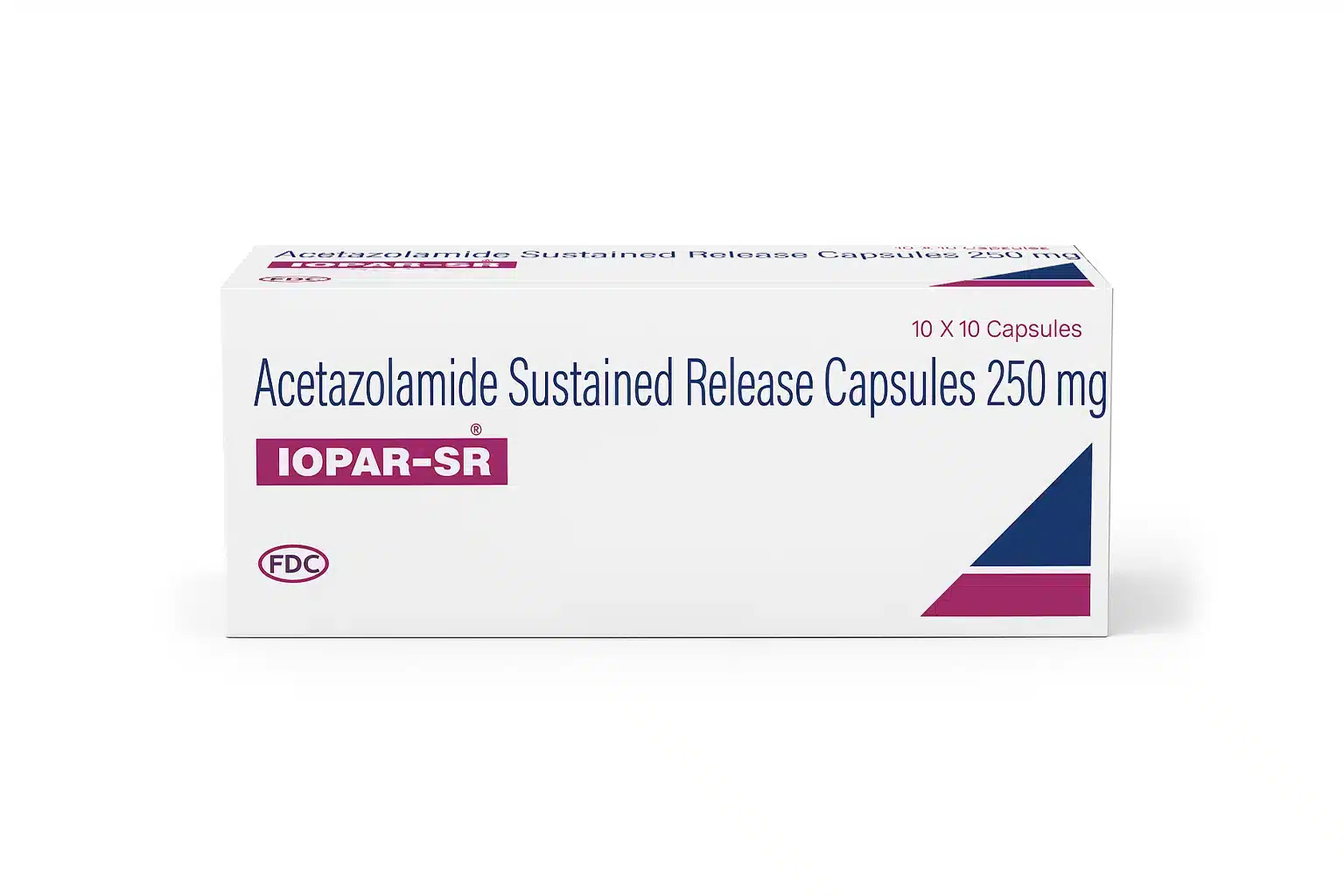

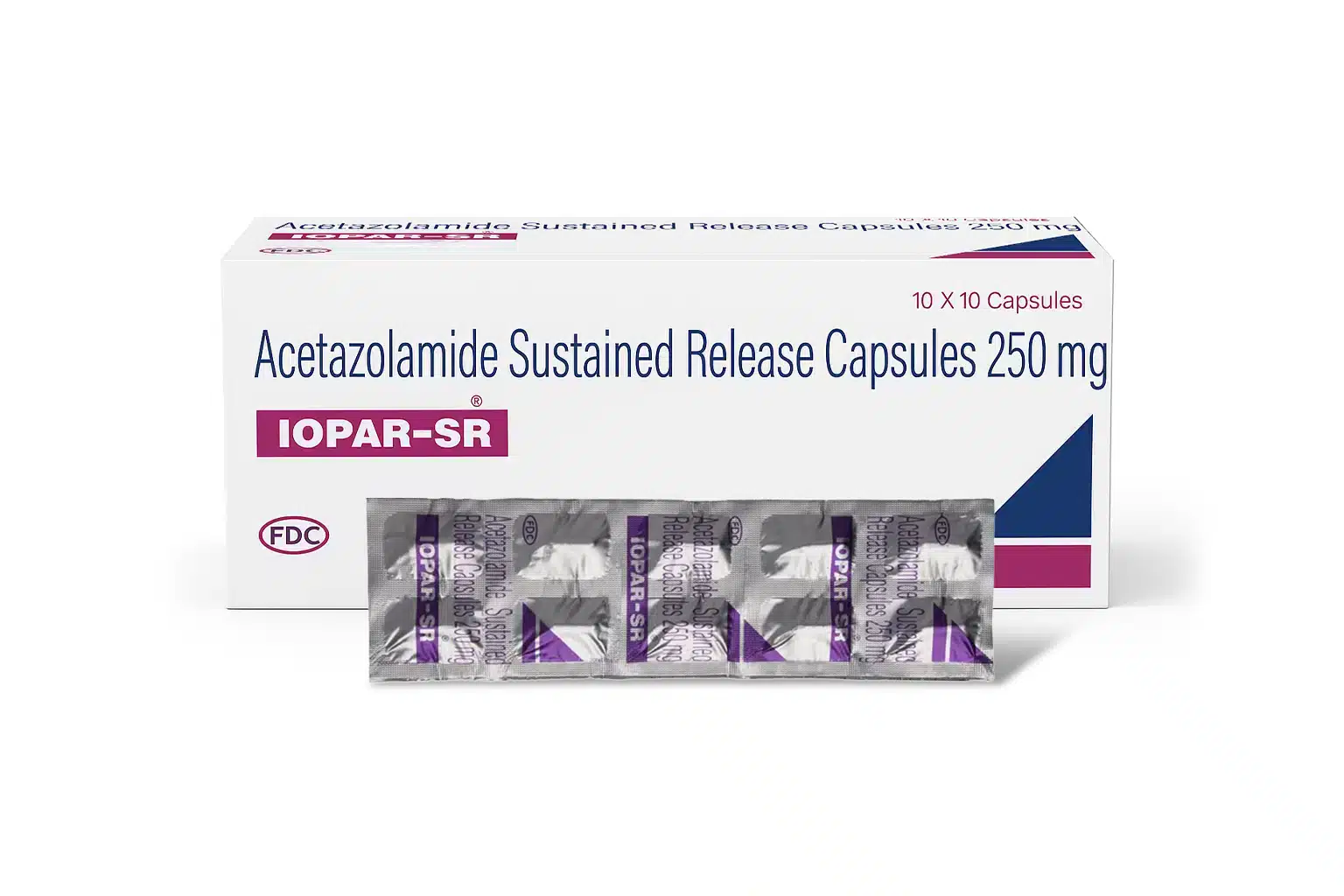
Iopar-SR 250 mg is an oral sustained-release formulation whose active ingredient is Acetazolamide (250 mg) — a carbonic anhydrase inhibitor. It is a prescription medicine used in various clinical conditions where reducing fluid secretion or modulating acid-base balance is therapeutically useful, such as glaucoma, altitude sickness, certain seizure types, and edema associated with heart failure or medications. This sustained-release capsule ensures prolonged action and should only be taken under medical supervision.
Key Features
| About Iopar-SR 250 mg | |
|---|---|
| Drug Class | Carbonic Anhydrase Inhibitor |
| Subclass | Antiglaucoma agents |
| Product Details | |
|---|---|
| Composition | Active ingredient: Acetazolamide 250 mg Form: Sustained-release capsule |
| Packaging Type | Strip |
| Pack Size | 10 capsules |
| Dosage | 250 mg capsule (as prescribed) |
| Therapeutic Class | Glaucoma therapy, Diuretic, Antiepileptic |
| Action Class | Carbonic anhydrase inhibition (reduces fluid secretion) |
| Chemical Class | Sulfonamide derivatives |
| Manufacturer | FDC Limited (Lumina) |
| Shelf Life | 2-3 years from the date of manufacturing |
| Usages | Used for glaucoma, altitude sickness, edema, and certain seizure disorders |
| Country of Origin | India |
| Storage | Store at room temperature (20-25°C), away from moisture and direct sunlight |
How does Iopar-SR 250 mg work?
- Inhibits carbonic anhydrase: Reduces formation of bicarbonate and fluid in the eye, decreasing intraocular pressure (IOP).
- Promotes diuresis: Increases urinary excretion of bicarbonate, sodium, and water, aiding in edema management.
- Supports altitude adjustment: Mild metabolic acidosis stimulates breathing, helping reduce symptoms of acute mountain sickness.
- Adjunct in epilepsy: Alters neuronal ion balance and pH, reducing seizure activity in some cases.
Dosage
- Follow physician’s prescription precisely — dosage depends on indication and formulation.
- Typical adult sustained-release dosing: total daily dose ranges from 500–1000 mg, individualized by the doctor.
- Swallow capsule whole with water; do not crush or chew sustained-release forms.
- For altitude sickness, start 24–48 hours before ascent and continue during exposure.
Uses
- Reduces intraocular pressure in glaucoma (adjunct therapy).
- Prevents and treats acute mountain sickness.
- Manages edema due to congestive heart failure or drugs.
- Used as adjunct therapy in certain seizure disorders.
Side Effects
- Paresthesia (tingling in hands/feet)
- Fatigue, drowsiness, or increased urination
- Metallic taste, nausea, diarrhea
- Metabolic acidosis (from bicarbonate loss)
- Electrolyte imbalance (hypokalemia, hyponatremia)
- Rare but serious: rash, Stevens-Johnson syndrome, blood disorders
- Allergic reactions in sulfa-sensitive patients
Interactions
- High-dose aspirin: May cause severe reactions; avoid unless supervised.
- Other diuretics: Increases risk of electrolyte disturbances.
- Other carbonic anhydrase inhibitors: Risk of additive effects; avoid combination.
- Laboratory tests: Alters acid-base and urine pH; inform lab staff if on therapy.
- Other medications: Always disclose all drugs and supplements to your doctor.
Pharmacokinetics
After oral administration, acetazolamide is absorbed and excreted largely unchanged in urine. The sustained-release formulation provides prolonged plasma levels for convenient dosing. Clearance depends on kidney function, requiring dose adjustment in renal impairment.
Precautions
- Do not use if allergic to acetazolamide or sulfonamides.
- Use cautiously in renal or hepatic impairment.
- Pregnant or breastfeeding women should use only if prescribed.
- Monitor electrolytes and acid-base balance during prolonged therapy.
- Diabetic patients should monitor blood sugar.
- Keep out of reach of children; for adult use only.
Conclusion
Iopar-SR 250 mg (Acetazolamide sustained-release) is a versatile medication for managing glaucoma, altitude sickness, edema, and certain seizures. Its sustained-release design ensures consistent plasma levels and convenient dosing. Always use under medical supervision, follow dosing instructions carefully, and report any unusual symptoms promptly.


Katie Jacob –
Prescribed for my glaucoma. Works fine, but need to take it regularly