
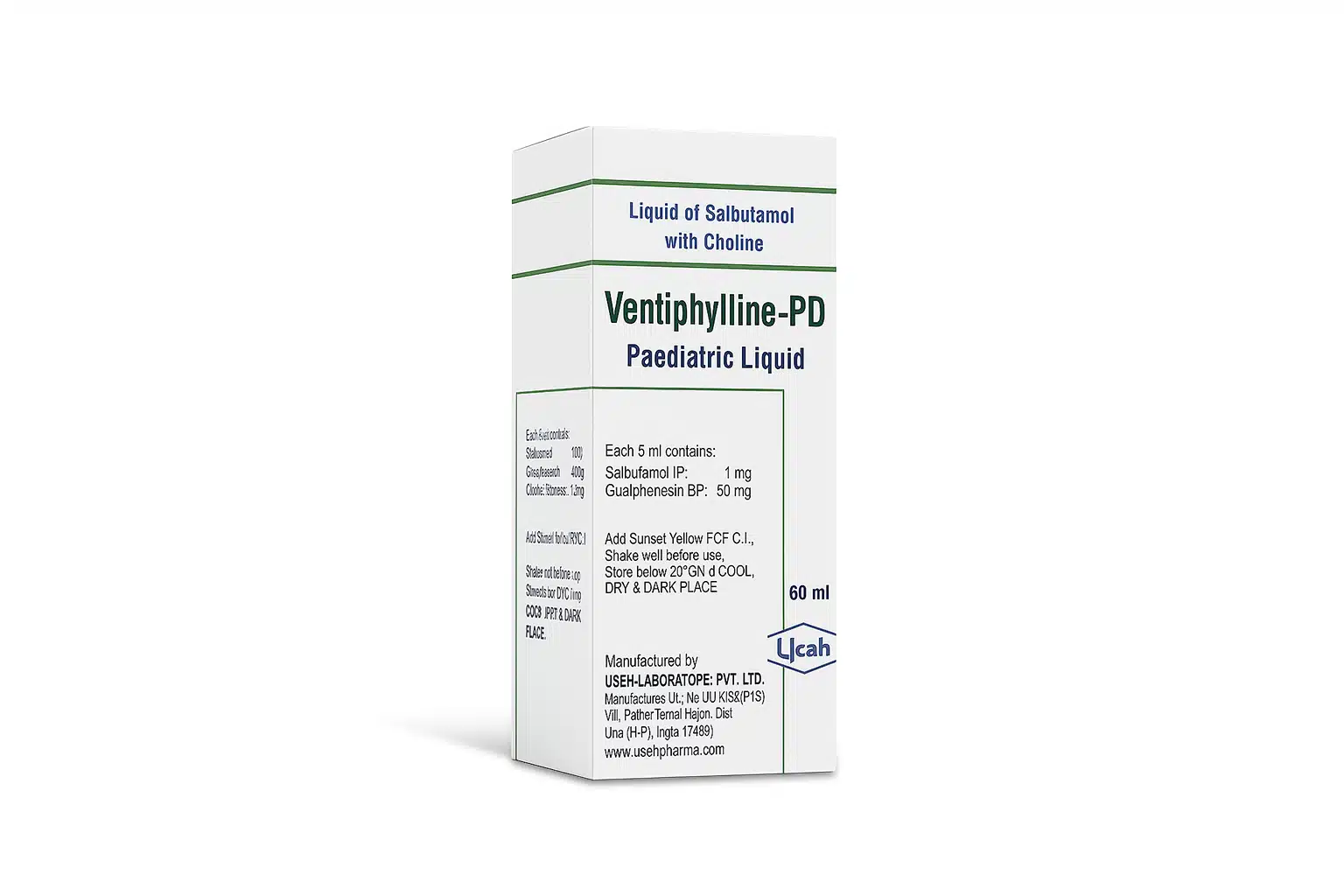


Ventiphylline Syrup is a combination, prescription respiratory syrup commonly formulated to contain a bronchodilator, mucolytic, and expectorant in a single, palatable oral liquid. This Levosalbutamol, Ambroxol, and Guaifenesin formulation helps to open the airways and mobilize mucus by acting rapidly through bronchodilation and targeted mucolytic and expectorant action so that the patients can breathe easier and recover comfort more quickly.
Key Features
| About Ventiphylline Syrup | |
|---|---|
| Drug Class | Bronchodilators and Mucolytics |
| Subclass | Combination of Bronchodilator and Expectorant |
| Product Details | |
|---|---|
| Composition | Active ingredients:
|
| Packaging Type | Syrup |
| Pack Size | 60 ml |
| Dosage | Twice a day |
| Therapeutic class | Respiratory Medicine |
| Action Class | Bronchodilator and Mucolytic |
| Chemical class | Combination of Benzyl alcohol derivatives, Guaifenesin, and Beta-2 Agonist |
| Manufacturer | Yash Pharma Laboratories Pvt Ltd |
| Shelf Life | 2–3 years from the date of manufacturing |
| Usages | Treatment of asthma and Chronic Obstructive Pulmonary Disease (COPD) symptoms. |
| Country of Origin | India |
| Storage | Store below 30°C in a cool and dry place, protected from direct sunlight, moisture, and heat. |
How does Ventiphylline Syrup Work?
- Bronchodilation-levosalbutamol: Levosalbutamol represents the active enantiomer of salbutamol. It selectively induces the stimulation of β₂-adrenergic receptors on airway smooth muscle, thereby producing fast bronchodilation. This helps in relieving wheeze and shortness of breath by dilating airways so that mucus can be more easily expectorated.
- Ambroxol acts both on the mucous producing mechanisms and on mucociliary clearance: by reducing sputum viscosity and stimulating production of serous bronchial secretions, it improves the transportability of mucus and favors expectoration. This action diminishes chest congestion and favors airway clearance.
- Expectorant action-guaifenesin: Guaifenesin increases the volume and reduces the viscosity of bronchial secretions. This thins phlegm and supports cough efficiency so that secretions can be expelled.
Uses
- Symptomatic relief of productive cough associated with acute bronchitis, colds with lower respiratory involvement, and other causes of mucus retention.
- Adjunctive therapy in asthma and COPD exacerbations where bronchospasm and mucus plugging coexist, used under clinician guidance. Supportive therapy in chest congestion with impaired expectoration to improve clearance and reduce cough burden.
- This medication manages symptoms and enhances comfort, while the root cause-specific diagnosis and treatment may include bacterial infection, pneumonia, heart failure, among others.
Dosage
One 5 mL spoonful (containing the stated per-5-mL strengths) two to three times daily, usually every 8–12 hours, as directed by your clinician. Some labels recommend dosing on an empty stomach; follow pack directions.
Side Effects
- Tremor
- Nervousness
- Palpitations
- Mild tachycardia from the bronchodilator (levosalbutamol).
- Gastrointestinal distress (nausea, vomiting, abdominal discomfort) due to mucolytics and expectorants.
- Headache
- Dizziness
- Lightheadedness
Interactions
- Sympathomimetics: Concomitant administration of other β₂-agonists with Ventiphylline Syrup may lead to an increased cardiovascular side effect. Overlap should be done under medical supervision.
- MAO inhibitors / tricyclic antidepressants: Concomitant use with non-selective MAO inhibitors or tricyclics may potentiate sympathomimetic effects — avoid or use with caution.
- CNS depressants and alcohol: Ambroxol and guaifenesin can increase somnolence when combined with sedatives; avoid alcohol.
- Other cough medicines: Avoid duplication of active ingredients, for example other guaifenesin or ambroxol-containing products to avoid overdose.
- Pediatric and pregnancy considerations: Check product labeling, some components may be contraindicated or require specialist advice in pregnancy, lactation, or very young children.
Pharmacokinetics
- Levosalbutamol is rapidly absorbed after oral administration and exerts systemic β₂ effects; oral bioavailability and onset are slower than inhaled formulations but still clinically meaningful for symptomatic bronchodilation.
- Ambroxol is well absorbed orally, metabolized in the liver, and concentrates in lung tissue, where it modulates secretion and mucociliary function.
- Guaifenesin has a principle action on the airway mucosa with minimal systemic accumulation, is metabolized hepatically, and excreted renally.
- Renal or hepatic impairment can affect clearance; consult a clinician for dose adjustments in significant organ dysfunction.
Precautions
- Cardiovascular: Use with caution in patients with ischemic heart disease, arrhythmias, or severe hypertension as β₂-agonists may affect heart rate and increase risk for arrhythmia.
- Hyperthyroidism, diabetes, and seizure disorders: β₂-agonists can exacerbate tachycardia or influence glucose and potassium levels; monitor as advised.
- Pregnancy & breastfeeding: Use only if the potential benefits justify potential risks; consult your doctor. Ambroxol has been used in pregnancy in some settings, but confirm with your clinician.
- Allergy to sulfonamides or excipients: Check the complete ingredient listing for allergic sensitivities.
Conclusion
Ventiphylline Syrup is a pragmatic combination therapy for symptomatic management of productive cough and chest congestion through the typical Levosalbutamol + Ambroxol + Guaifenesin formulation. Further, this combination helps to open the airways and mobilize mucus by acting rapidly through bronchodilation and targeted mucolytic and expectorant action so that the patients can breathe easier and recover comfort more quickly. Use under clinician guidance, follow dosing instructions, look out for cardio or CNS side effects, and seek timely medical review for red flag symptoms.
References
https://pubmed.ncbi.nlm.nih.gov/37167145/
https://pmc.ncbi.nlm.nih.gov/articles/PMC5724298/
Olivia Morgan –
Good for cough and wheezing. Tastes a bit bitter but works