
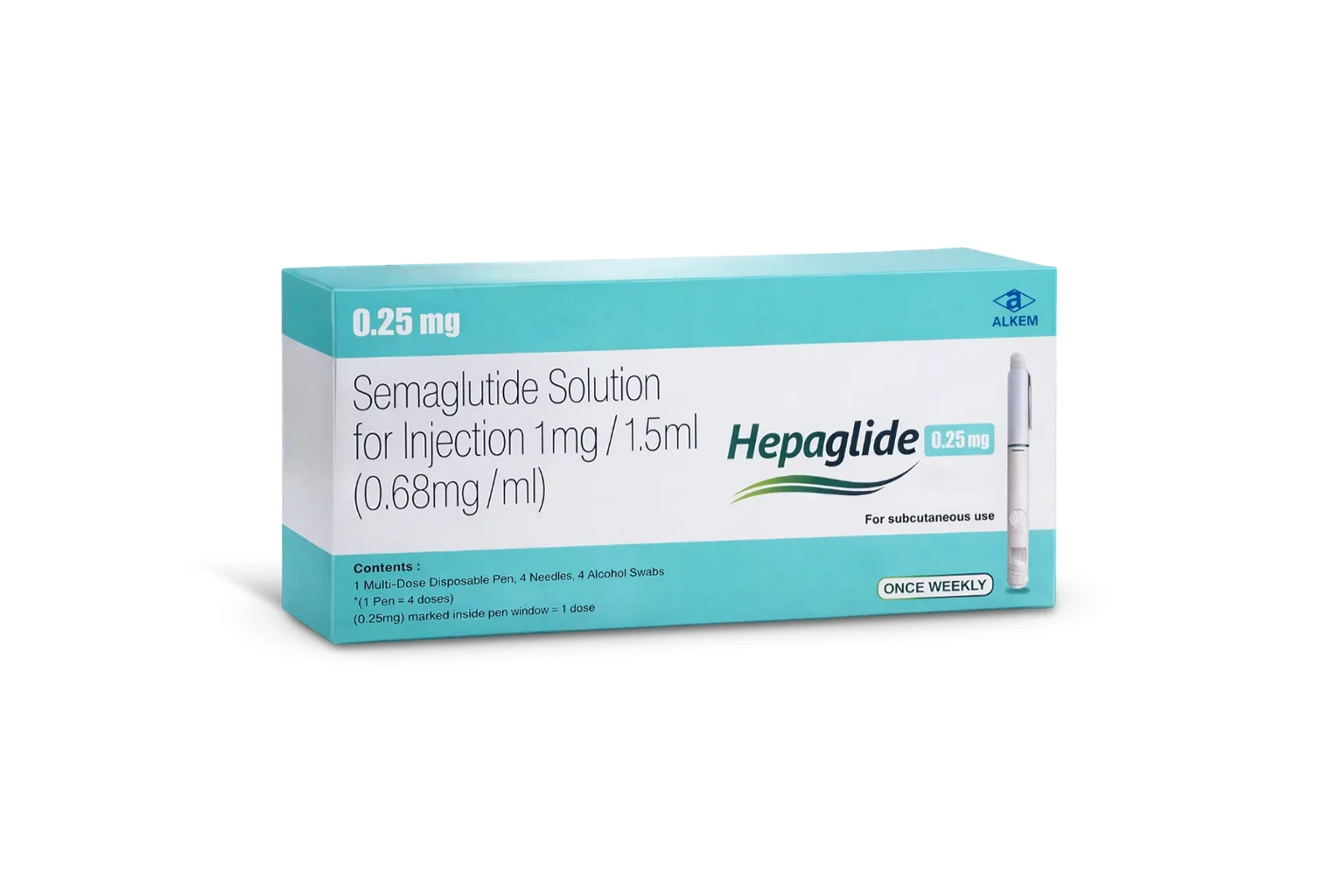
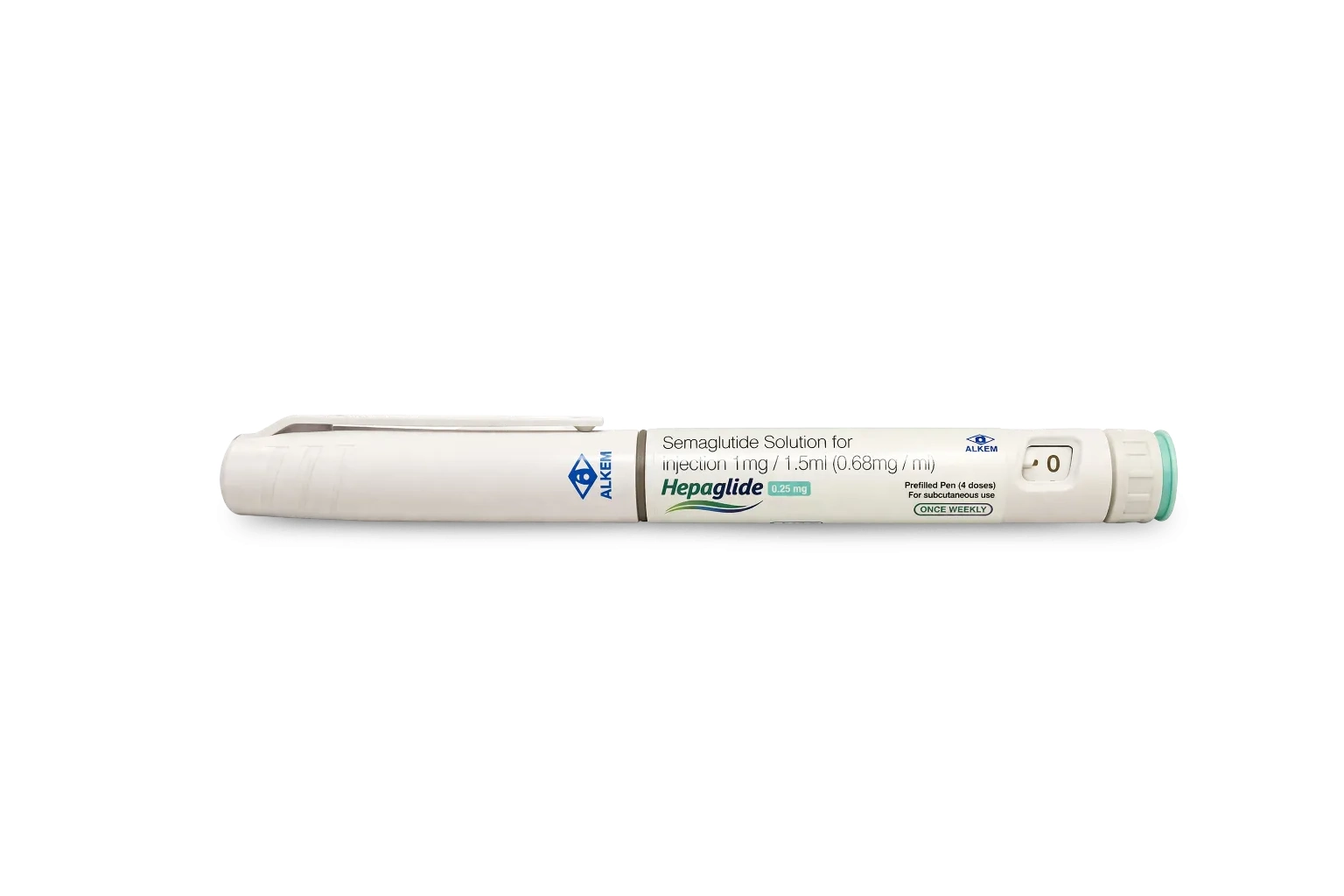
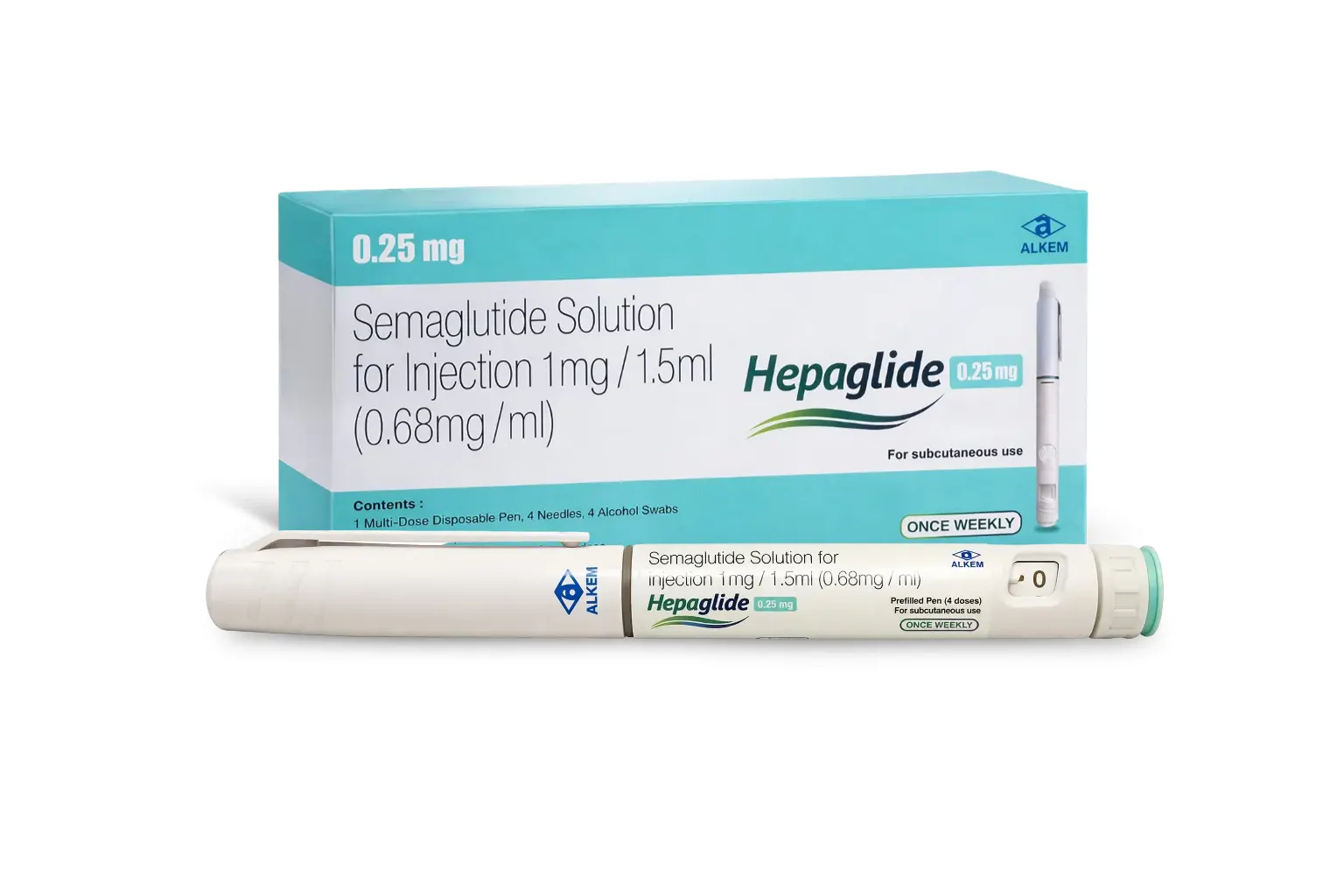
Hepaglide 0.25 mg Injection is indicated for cardiovascular risk reduction and weight management in adults with obesity or overweight. It works best when combined with a reduced calorie diet and regular physical activity. It is generally injected under the skin in the abdomen, thigh or upper arm.
Key Features
| About | |
|---|---|
| Drug Class | Incretin Mimetics |
| Chemical Class | Glucagon-Like Peptide-1 (GLP-1) Receptor Agonist |
| Active Ingredient | Semaglutide |
| Hepaglide 0.25 mg Injection | |
|---|---|
| Composition | Active Ingredient
Formulation
|
| Dosage | 0.25 mg Once Weekly |
| Used For | Weight Management, Type 2 Diabetes |
| Onset of Action | 1–3 Days |
| Duration of Action | Approximately 1 Week |
| Manufacturer | Alkem Laboratories Ltd. |
| Shelf Life | Unopened: 24–36 Months When Stored Between 35.4°F–46.4°F (2°C–8°C) Opened: Discard Within 56 Days |
| Storage | Store Between 35.4°F–46.4°F (2°C–8°C). Do Not Freeze. |
| Country of Origin | India |
How does Hepaglide 0.25 mg work?
Hepaglide 0.25 works by mimicking the action Glucagon-like peptide (GLP), a natural hormone in the body that helps control appetite. It reduces hunger and food cravings. It also helps the body to regulate sugar levels.
Directions for use
- Hepaglide injection is administered once weekly at the same day subcutaneously.
- Do not self administer without proper training and medical guidance.
- It is better if given by a trained professional.
Dosage
Use as and when directed by the healthcare provider.
Uses
Hepaglide 0.25 mg is used for:
- Cardiovascular risk reduction
- Type 2 Diabetes
- Chronic weight management in adults with obesity and overweight
Side effects
- Headache
- Constipation
- Severe dehydration
- Hypoglycemia
- Redness, pain at the site of injection
- Fatigue
- Digestive discomfort
- Allergic reactions
Interactions
- Semaglutide alters the absorption of medications including thyroid medications, oral contraceptives, diuretics, blood pressure medications and pain relievers.
- Semaglutide should be avoided with other GLP-1 agonists like Liraglutide, Tirzepatide.
- Herbal supplements like gymnema, bitter melon or fenugreek if taken with Semaglutide can cause blood sugar to drop too drastically.
- Coadministration of Hepaglide along with Gatifloxacin may sometimes affect blood glucose levels.
- Concomitant use of Hepaglide with Bexarotene will increase the risk of pancreatitis.
- Avoid sulfonylureas like glimepiride, glipizide and insulin as it can increase the risk of hypoglycemia.
Precautions & Warnings
- To prevent skin irritation or lumps, change the site of administration every week.
- Drink plenty of water to counteract dehydration.
- Do not use the injection if you or a close family member had a history of thyroid cancer like medullary thyroid carcinoma or Multiple endocrine Neoplasia Syndrome type 2.
- The injection is not recommended for children below the age of 18 years.
- Do not use the injection if you are pregnant, planning pregnancy or breastfeeding.
- Do not share the injection with other users.
- Patients with renal impairment should use the injection with caution especially if severe nausea, vomiting or dehydration occurs.
- Some people might experience dizziness during dose escalation. Do not drive during such times.
- Contact your physician immediately if you experience any severe or persistent side effects.
Conclusion
Hepaglide 0.25 mg injection is a medication that is used to support weight management along with Type-2 diabetes. It should be used once a week, usually on the same day. The medicine works best and safely when paired with a healthy reduced calorie diet and regular exercising. It should be used under medical supervision.
luke hughes –
I was very scared before starting but the lower dosage has helped me ease into this well. Didn’t really experience any side effects aside from some cramping
Olivia Brown –
I was very scared before starting but the lower dosage has helped me ease into this well. Didn’t really experience any side effects aside from some cramping