
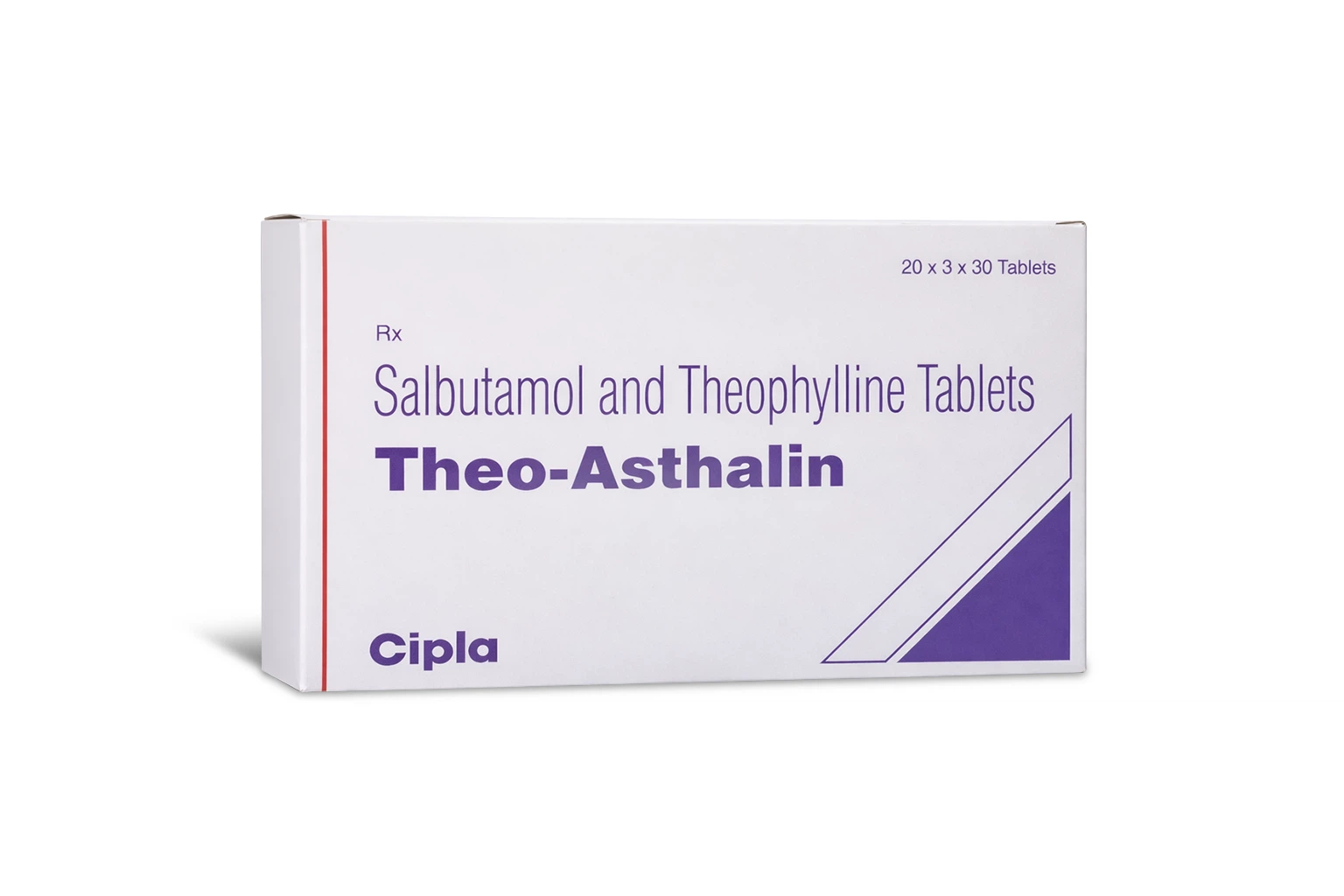
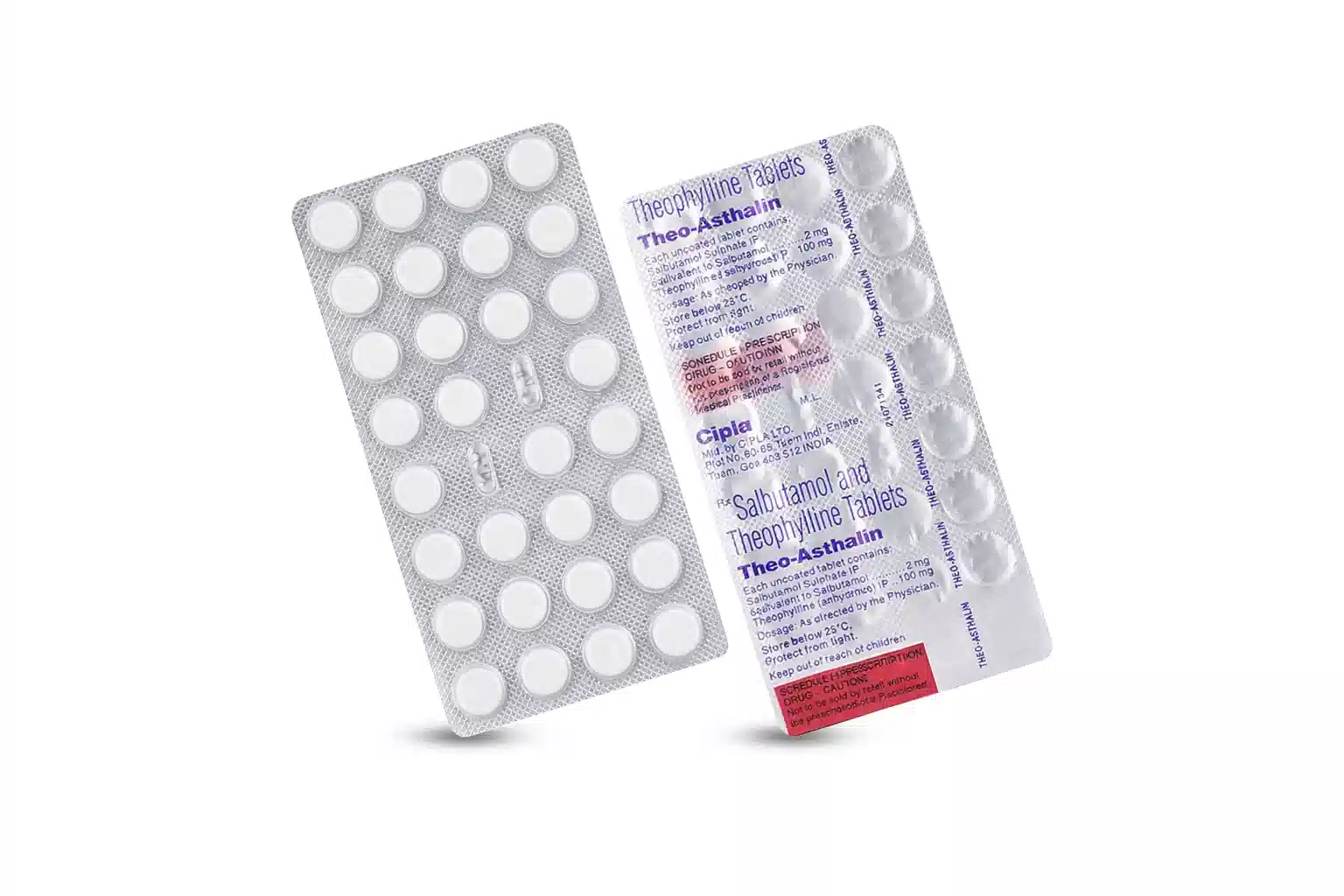
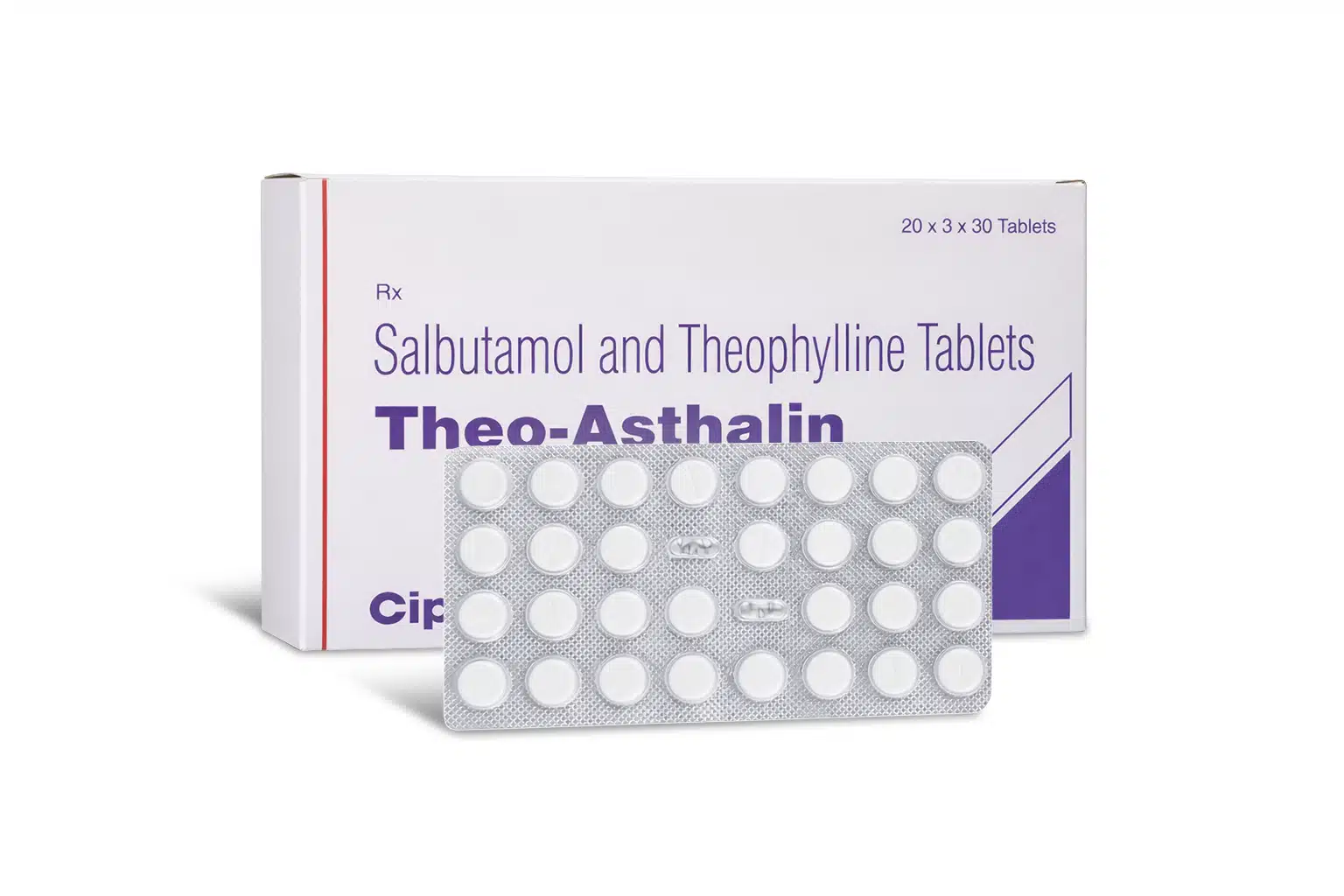
Theo Asthalin 2 mg+100 mg is an Antiasthamatic drug that is used in treating conditions like Bronchospasm, Asthma and Chronic Obstructive Pulmonary Disease (COPD) Symptom. Salbutamol and theophylline anhydrous are active ingredient present in Theo Asthalin 2 mg + 100 mg that works by blocking PDE3 and PDE4 enzymes by increasing the CAMP level in bronchial smooth muscle this relaxes the muscle and leads to bronchodilation.
Key Features
| About Theo Asthalin 2 mg + 100 mg | |
|---|---|
| Drug Class | Bronchodilator |
| Subclass | Beta-2 Adrenergic Agonist + Methylxanthine Combination |
| Product Details | |
|---|---|
| Composition | Active Ingredients:
Inactive Ingredients:
|
| Packaging Type | Blister Pack |
| Pack Size | 2 × 20 Tablets |
| Dosage | 1 tablet twice a day |
| Therapeutic Class | Anti-asthmatic |
| Action Class | Beta2-Adrenergic Agonist |
| Chemical Class | Beta2-Adrenergic Agonist and Methylxanthine Derivative |
| Manufacturer | Cipla |
| Shelf Life | 24–36 Months |
| Uses | Treatment of asthma and Chronic Obstructive Pulmonary Disease (COPD) symptoms |
| Country of Origin | India |
| Storage | Store below 30°C in a cool and dry place, protected from direct sunlight, moisture, and heat. |
How does Theo Asthalin 2 mg+100 Mg
- Inhibiting the phosphodiesterase enzymes (increasing intracellular cyclic AMP), that an antagonist of adenosine receptors, and modulation of intracellular calcium levels. Additionally, it has mild anti-inflammatory properties and improves diaphragmatic contractility.
- The combination enhances bronchodilatory efficacy while potentially reducing the dose of each component required, offering synergistic relief in moderate to severe bronchospasm.
Usage
- Theo Asthalin 2 mg + 100 mg can be used in treating symptoms of bronchospasm associated with asthma.
- Managing the symptoms of chronic obstructive pulmonary disease (COPD).
Dosage
- Adults: One tablet twice daily, preferably after meals.
- Maximum recommended dose: 2 tablets per day.
- Half tablet twice daily, under medical supervision.
- Not recommended for children below 6 years.
Side Effects
- Tremor
- Headache
- Palpitations
- Tachycardia
- Nervousness
- Restlessness
- Nausea
- Vomiting
- Gastric irritation
- Muscle cramps
- Arrhythmias
- Hypertension
- Insomnia
- Dizziness
Drug Interactions
- Synchronic use with other beta-agonists may increase cardiovascular side effects i.e., increase in heart rate.
- Beta-blockers (especially non-selective ones like propranolol) may antagonize bronchodilatory effect.
- Cimetidine, fluoroquinolones, macrolide antibiotics, and allopurinol may increase theophylline levels and also may increase the risk of toxicity.
- There’s decrease in efficacy and theophylline level and phenytoin, rifampicin, barbiturates.
Pharmacokinetics
- It is rapidly absorbed orally and reaches peak plasma concentration within 1–3 hours.
- Metabolized in liver i.e., Hepatic metabolism it may follows.
- Is excreted primarily in the form of urine as metabolites and unchanged drug. Half-life is about 2.7–5 hours.
Theophylline
- Well absorbed orally; peak plasma concentration within 1–2 hours.
- Metabolized primarily by hepatic CYP1A2 enzyme.
- Therapeutic plasma concentration: 10–20 mcg/ml.
- Half-life: 6–12 hours in adults; varies with age, smoking status, liver function.
Precautions
- It may lead to increase the risk of cardiovascular disorders (arrhythmias, hypertension), hyperthyroidism, diabetes mellitus, or seizure disorders so just be cautious.
- Monitor serum theophylline levels periodically, especially during initial or dose adjustment.
- Avoid abrupt withdrawal as it may precipitate bronchospasm.
- It should be avoided during pregnancy or prior consult your medical professional.
- Lactation: Excreted in breast milk; use cautiously.
- Elderly patients may require lower doses due to reduced clearance.
Conclusion
Theo Asthalin 2 mg+100 mg is an Antiasthamatic drug that is used in treating conditions like Bronchospasm, Asthma and Chronic Obstructive Pulmonary Disease (COPD) Symptom. Salbutamol and theophylline anhydrous are active ingredient present in Theo Asthalin 2 mg + 100 mg that works by blocking PDE3 and PDE4 enzymes by increasing the CAMP level in bronchial smooth muscle this relaxes the muscle and leads to bronchodilation. It may show some side effects like tremor, headache, palpitations, tachycardia and nervousness, to avoid such side effects and interaction consult a healthcare provider prior opting for any such medication.


Gregory Lee –
good product