
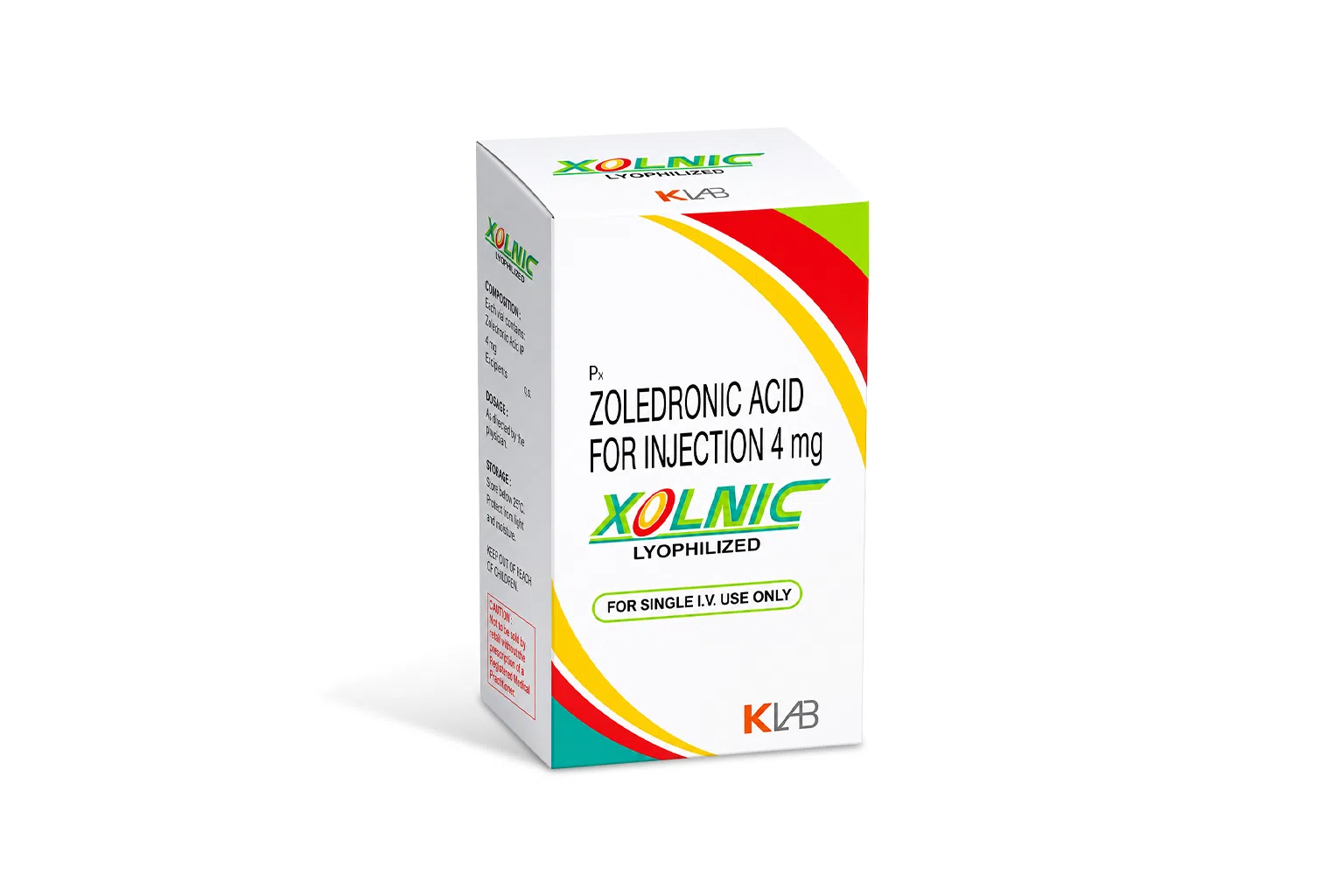
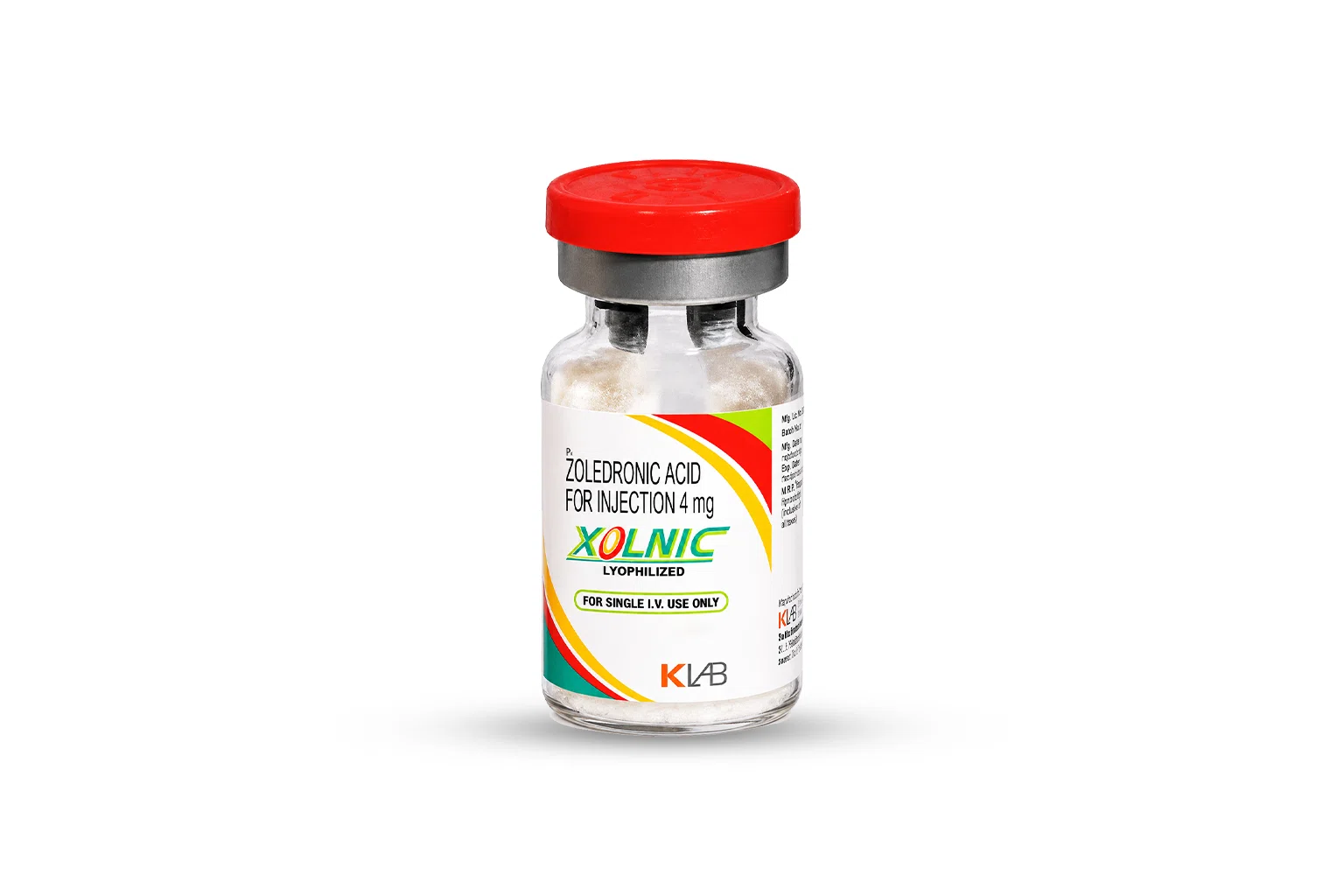
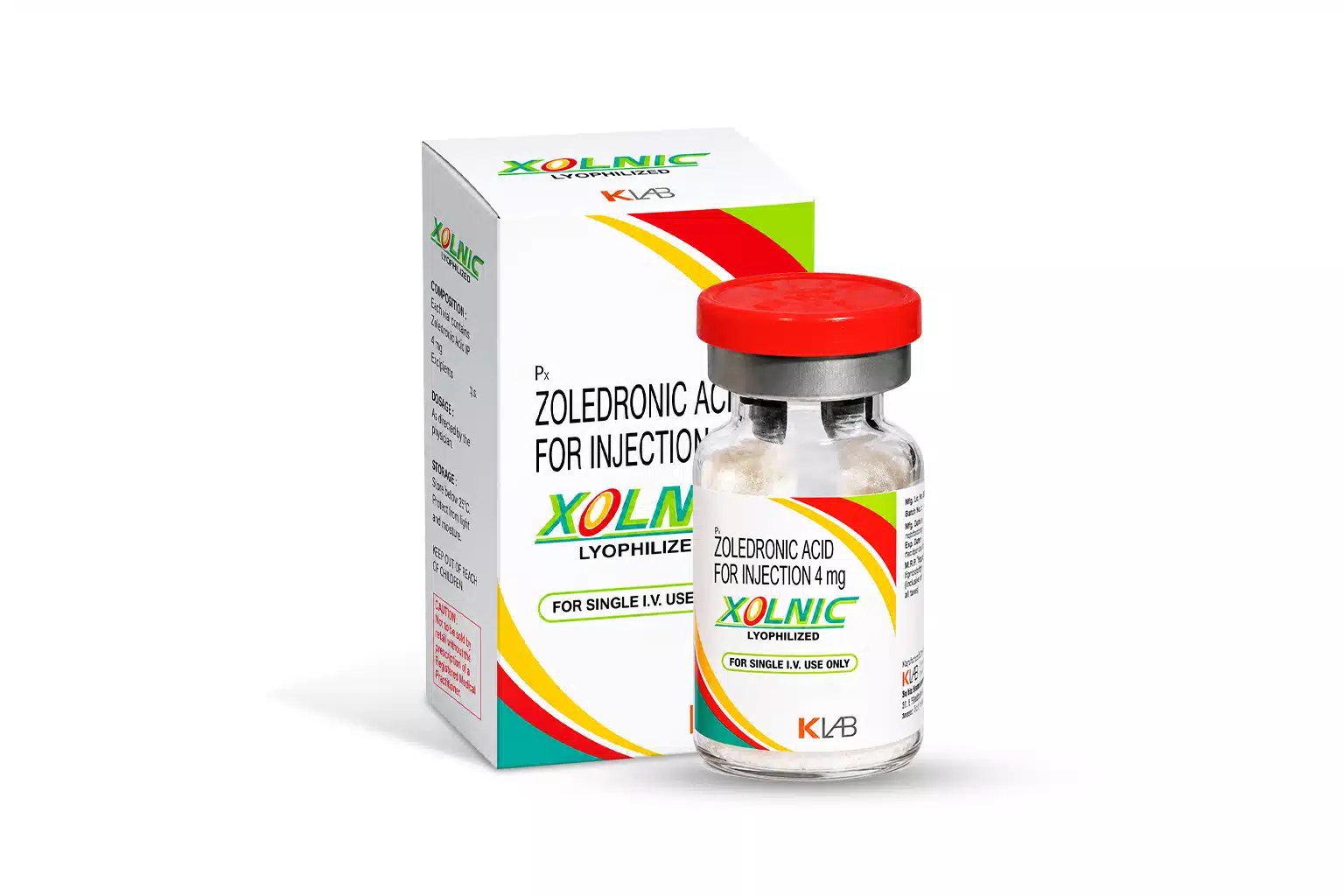
Xolnic 4 mg consists of an active ingredient, zoledronic acid. It belongs to the group of substances called bisphosphonates. It is used to reduce the amount of calcium in the blood in people where it is too high due to cancer or any other condition. The main function of this injection is to increase bone density.
Key Features
| About Product | |
|---|---|
| Product Name | Xolnic 4 mg |
| Drug Class | Organic Phosphonic Acids and Derivatives |
| Chemical Class | Bisphosphonates |
| Product Details | |
|---|---|
| Active Ingredient | Zoledronic Acid |
| Formulation | Intravenous Preparation |
| Dosage | 4 mg |
| Uses | Osteoporosis |
| Onset of Action | 1–2 Hours |
| Duration of Action | 1–2 Years |
| Manufacturer | Khandelwal Laboratories Pvt. Ltd. |
| Shelf Life | 2 Years |
| Country of Origin | India |
| Storage | Below 77℉ |
How does Xolnic 4 mg work?
Xolnic 4 mg consists of zoledronic acid which works by inhibiting osteoclast activity. The drug slows down the rate of resorption of the bone cells, giving them enough time to grow on their own.
Directions for use
- It should be administered intravenously by a healthcare professional in a medical setting only.
- Follow the physician’s instructions on the dosage and timing of the injection.
- Typically it should be administered once in 3-4 weeks
Dosage
Use the injection as and when directed by the healthcare provider in a healthcare setting only.
Substitutes
Uses
Xolnic acid is used for:
- Postmenopausal osteoporosis
- Paget’s disease of bone
- Cancer related bone complications
- Hypercalcemia of malignancy- high levels of calcium in the blood caused by cancer
Side effects
Some major and minor side effects seen with Xolnic 4 mg are:
- Abdominal pain
- Acid reflux
- Headache
- Muscle or Joint pain
- Flatulence
- Diarrhea
- Constipation
- Difficulty in swallowing
Interactions
Drug-drug Interactions
- Nephrotoxic drugs
Concomitant use of nephrotoxic drugs along with Xolnic 4 mg can increase the risk of kidney dysfunction.
- Diuretics
Using loop diuretics like furosemide, bumetanide, etc along with zoledronic acid can increase the risk of developing severe, symptomatic hypocalcemia.
- Antibiotics
Using aminoglycoside antibiotics with the injection can be risky as it can lower the levels of calcium in the blood.
- Other bone medications
Do not administer zoledronic acid along with other bisphosphonates or RANKL inhibitors (e.g. denosumab) without medical supervision.
Drug-disease interaction
- Renal dysfunction
Xolnic 4 mg should be used with extreme caution or avoided in patients with severe kidney disease or impaired creatinine clearance.
- Hypocalcemia
The injection should be avoided in patients with pre-existing calcium levels until the condition is corrected.
- Asthma
Clinical monitoring is required for asthma sensitive patients.
Precautions & Warnings
- The injection is strictly avoided if you are pregnant.
- Do not use this medicine if you have had an allergic reaction to any of the components in the past.
- Xolnic 4 mg is contraindicated in patients with low levels of calcium in their blood and with a high level of kidney damage.
- Do not drive or operate heavy machineries until you know how the medication affects your body.
- It is not advised to be used in children and adolescents under 18 years of age.
Conclusion
Xolnic 4 mg is a bisphosphonate injection containing zoledronic acid that is primarily used to strengthen bones, manage osteoporosis, treat Paget’s disease, and prevent cancer related bone complications. It works by slowing down bone breakdown and improving bone density. Regular follow-up and adequate calcium and Vitamin D intake, when advised by a physician can help maximize the benefits of treatment while minimizing potential side effects.
FAQ’s
2. Can Xolnic 4 mg be used in children?
3. Is hydration important after receiving Xolnic 4 mg?
4. How does Xolnic 4 mg prevent fractures?
5. What are the side effects of Xolnic 4 mg?

aria nguyen –
Comfortable treatment experience and reliable product quality.