
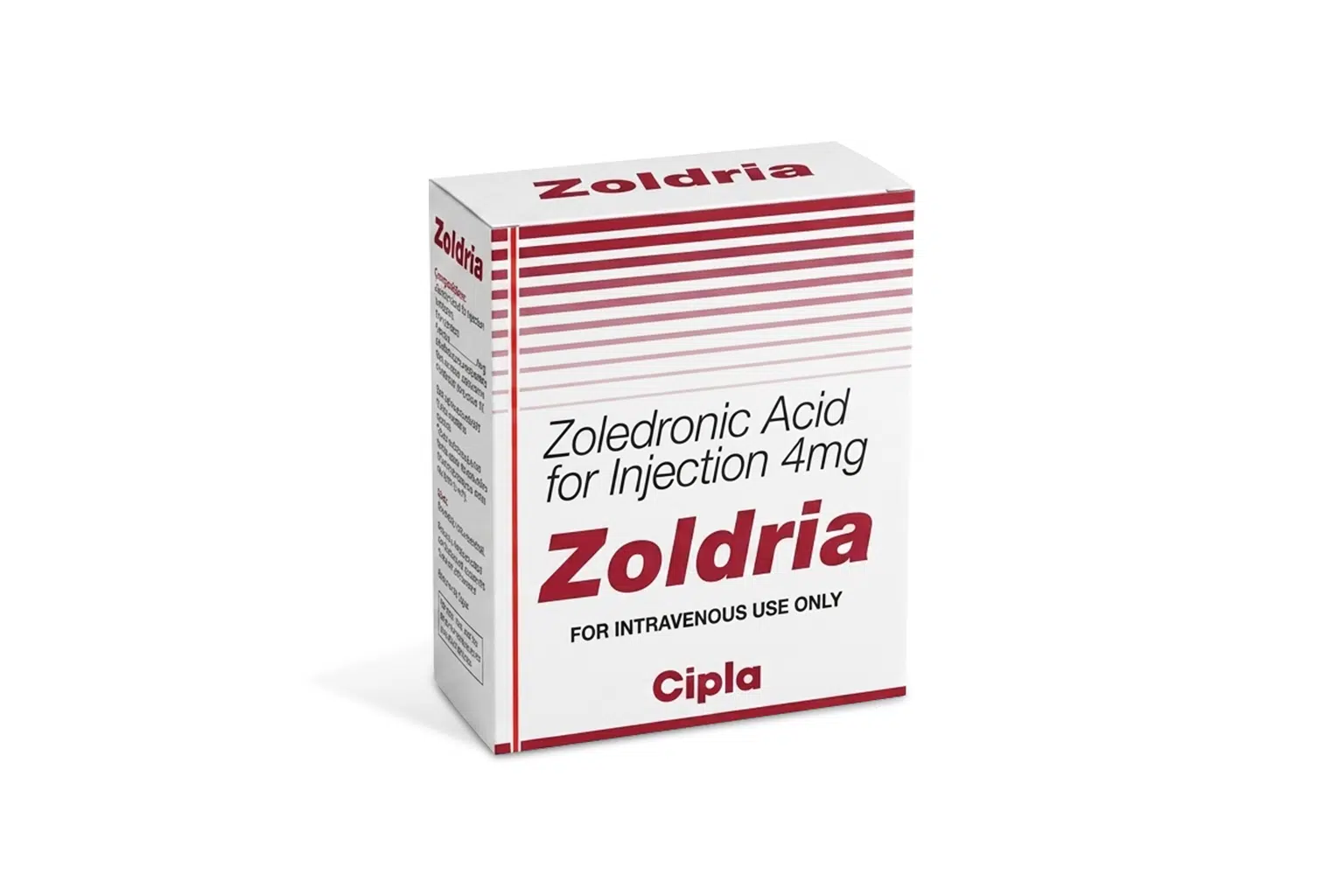
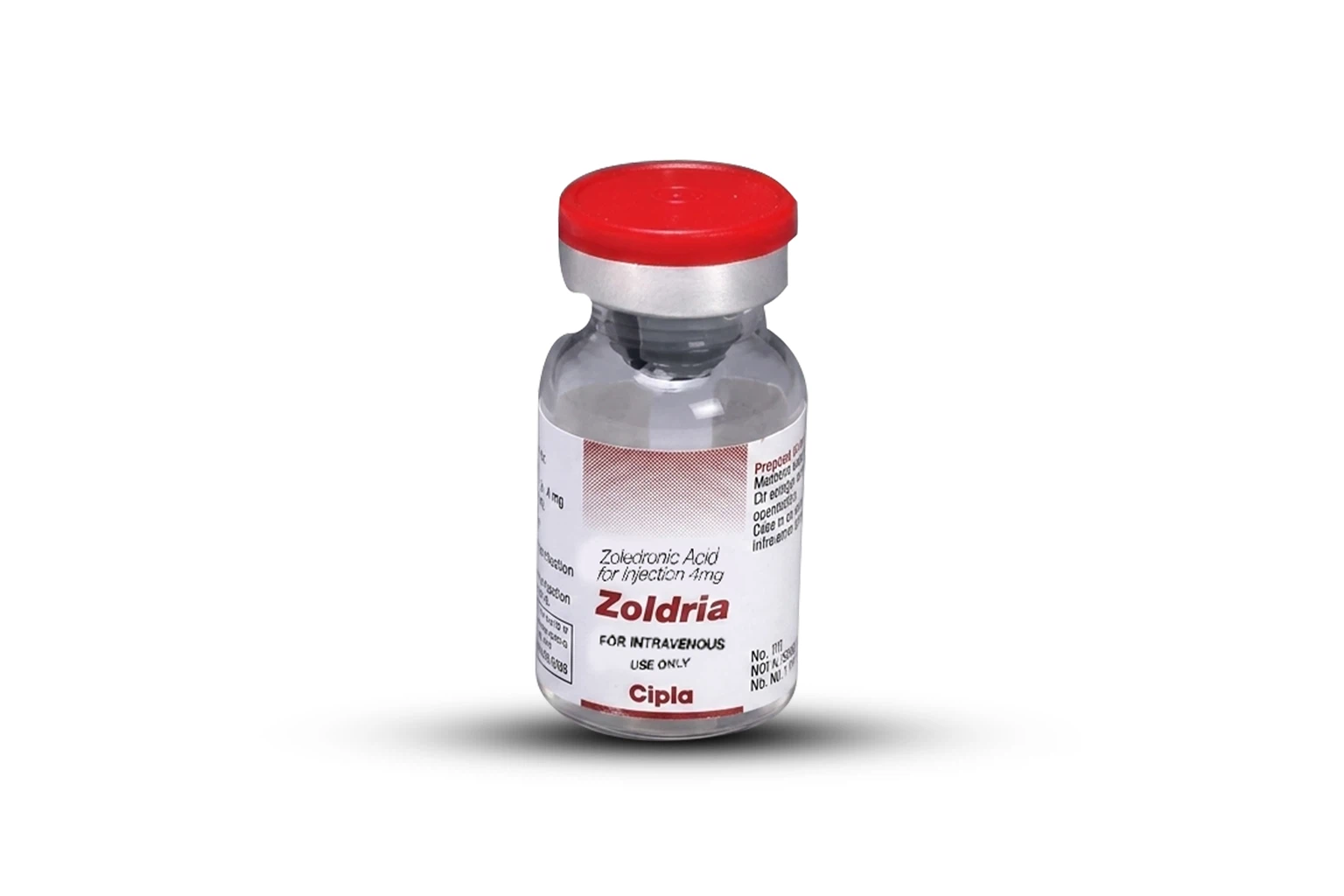
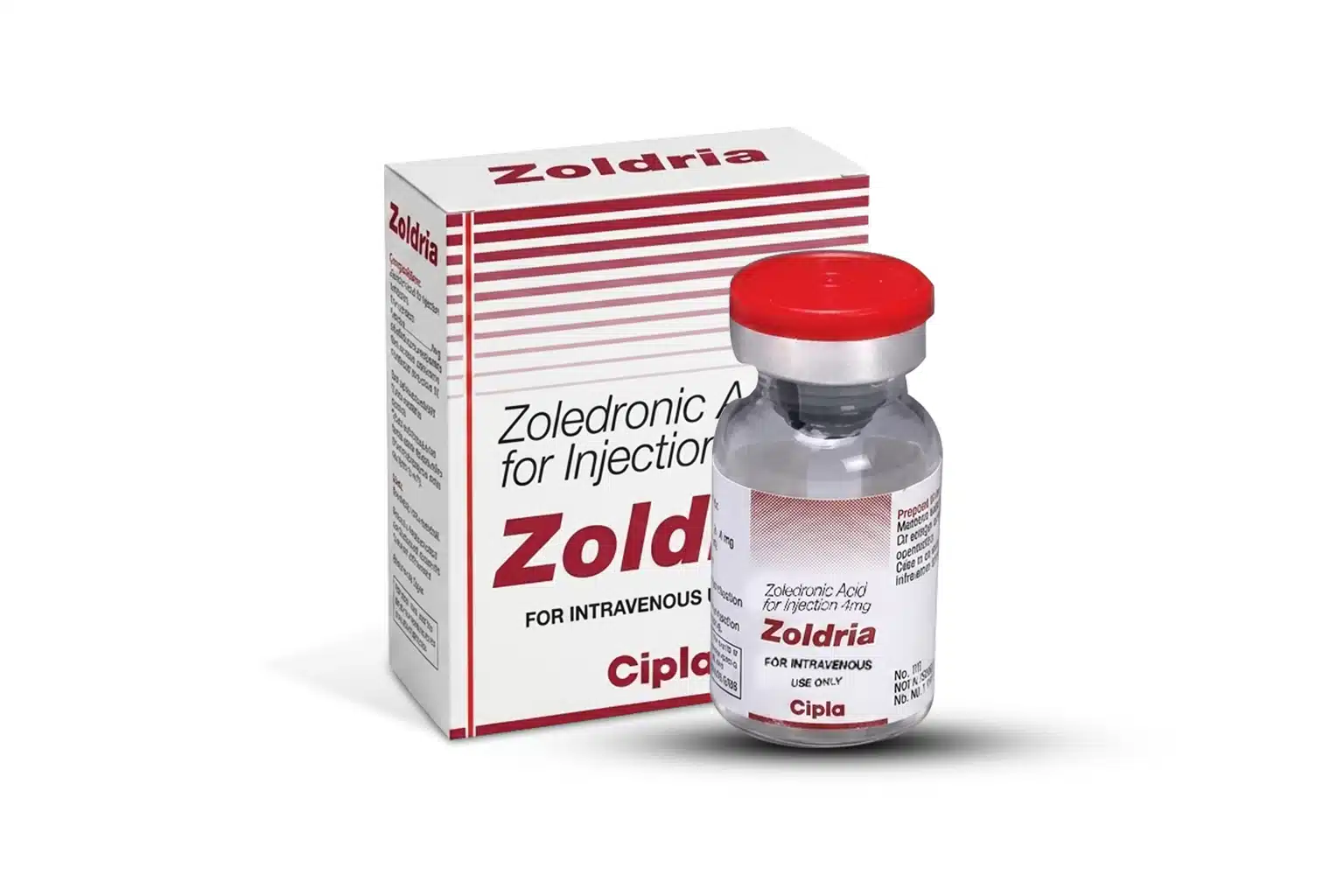
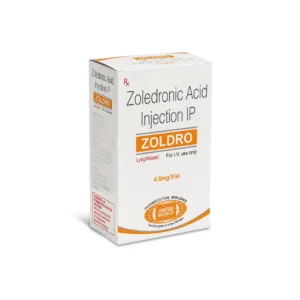
Zoldria 4 mg is an intravenous bisphosphonate medication containing zoledronic acid, primarily used to treat osteoporosis, especially in postmenopausal women and individuals receiving long-term steroid therapy. It can be used in cancer therapy,where the medicine is used to treat or prevent bone damage caused by cancer cells.
Key Features
| About Product | |
|---|---|
| Product Name | Zoldria 4 mg |
| Drug Class | Organic Phosphonic Acids and Derivatives |
| Chemical Class | Bisphosphonates |
| Product Details | |
|---|---|
| Active Ingredient | Zoledronic Acid |
| Formulation | Intravenous Preparation |
| Dosage | 4 mg |
| Uses | Osteoporosis |
| Onset of Action | 1–2 Hours |
| Duration of Action | 1–2 Years |
| Manufacturer | Cipla Pharmaceuticals Ltd. |
| Shelf Life | 2 Years |
| Country of Origin | India |
| Storage | Below 77℉ |
How does Zoldria 4 mg work?
Zoldria 4 mg consists of Zoledronic acid which works by inhibiting the activity of cells that destroys the bones and also strengthens the bones by reducing the risk of fractures.
Directions for use
- It should be administered intravenously by a healthcare professional in a medical setting only.
- Typically it should be administered once in 3-4 weeks
Dosage
- Missed dose
Since this medicine is administered in the hospital or clinical setting, the likelihood of a missed dose is very low.
- Overdose
Since this medicine is administered in a hospital or clinical setting, the likelihood of an overdose is very low.
Substitutes
Zolasta 4 mg
Zobone 4 mg
Zolon 4 mg
Uses
Zoldria 4 mg can be used for:
- Postmenopausal osteoporosis
- Hypercalcemia- high levels of calcium in the blood
- Paget’s disease- a condition that grows your bone too weak and large
Side effects
- Hypersensitivity (rare)
- Diarrhea
- Loss of appetite
- Nausea
- Trouble sleeping
- Headache
- Redness or swelling of eyes
- Pain at the injection site
- Shortness of breath
Interactions
- Nephrotoxic drugs like ACE inhibitors, ibuprofen, acetaminophen, etc should not be used in combination with Zoldria 4 mg as it can increase the risk of renal failure.
- Zoldria may interact with antibiotics like gentamicin.
- Concomitant use of bisphosphonates and Zoldria 4 mg should be avoided as it can drastically reduce the level of calcium levels in the body.
- Loop diuretics like furosemide can increase the risk of developing critical hypoglycemia.
- Co-administration of Zoldria with Deferasirox can increase the risk of stomach ulcers and bleeding.
Precautions & Warnings
- Strict monitoring and specific safety precautions should be followed
- It is generally unsafe during pregnancy and breast feeding as it can cause fetal harm.
- It is generally advised to avoid alcohol or limit during the treatment.
- It is not advised to be used in children and adolescents under 18 years of age.
- Do not drive or operate heavy machineries until you know how the medication affects your body.
- Drink plenty of fluids to avoid dehydration and kidney damage
Conclusion
Zoldria 4 mg is a bisphosphonate class of medication that is used to treat various bone conditions like postmenopausal osteoporosis, hypercalcemia, paget’s disease, etc. It works by inhibiting the activity of cells that destroys the bones. The medication may not be suitable for all the people and thus informing your physician about the existing medical conditions is necessary. Use the medications under medical supervision and in a clinical setting only.


Mcculam –
Very effective treatment and easy to manage during appointments.