
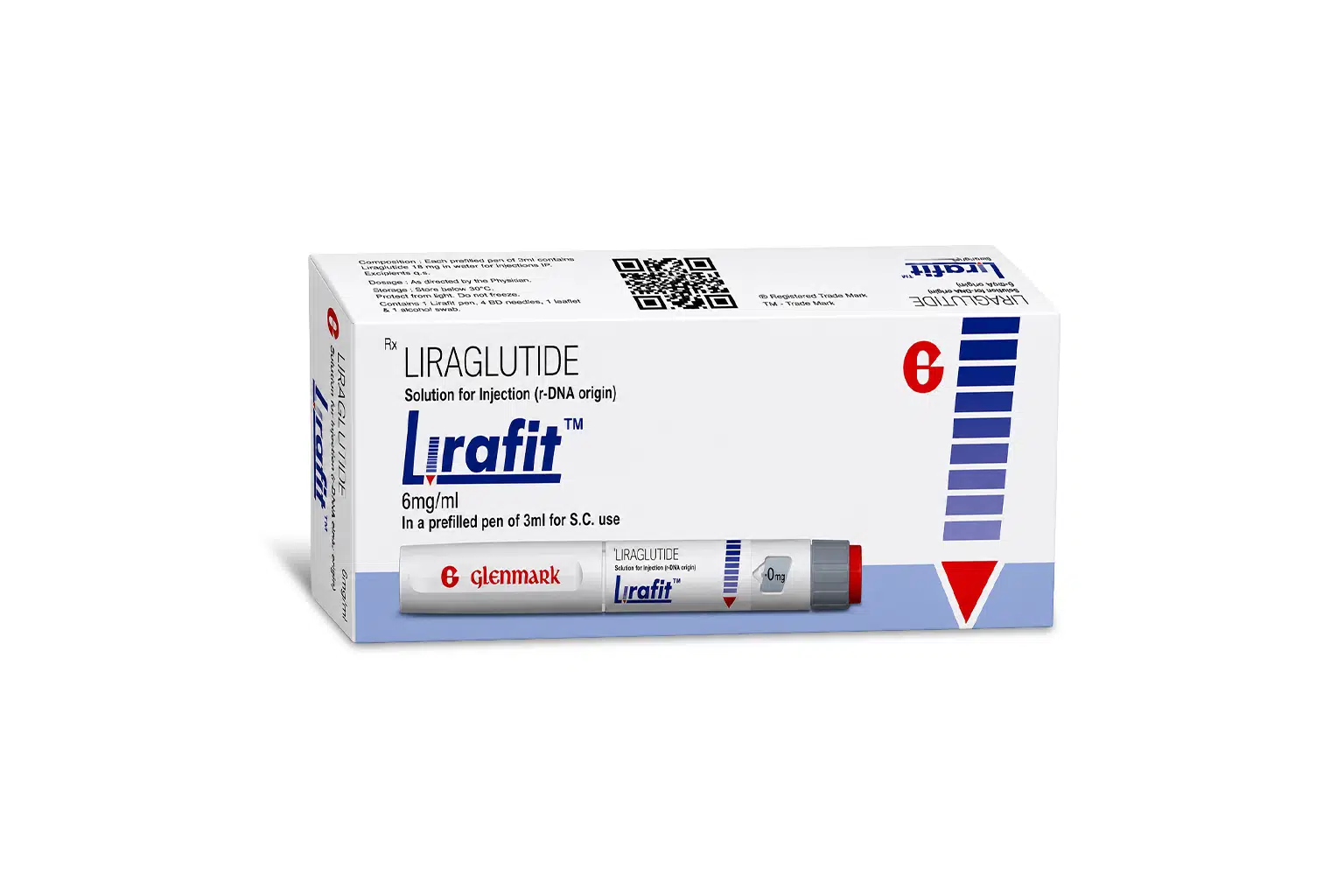
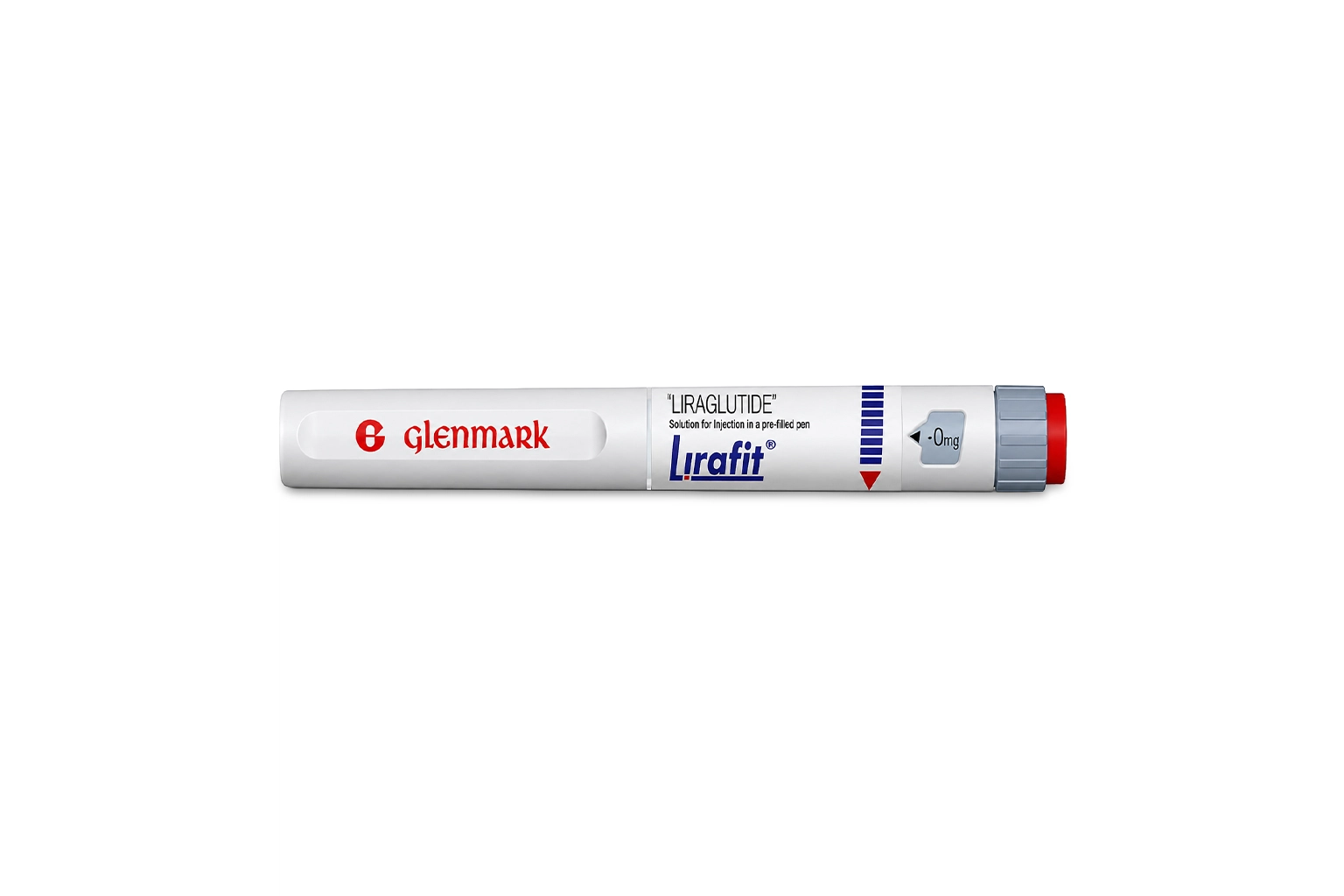
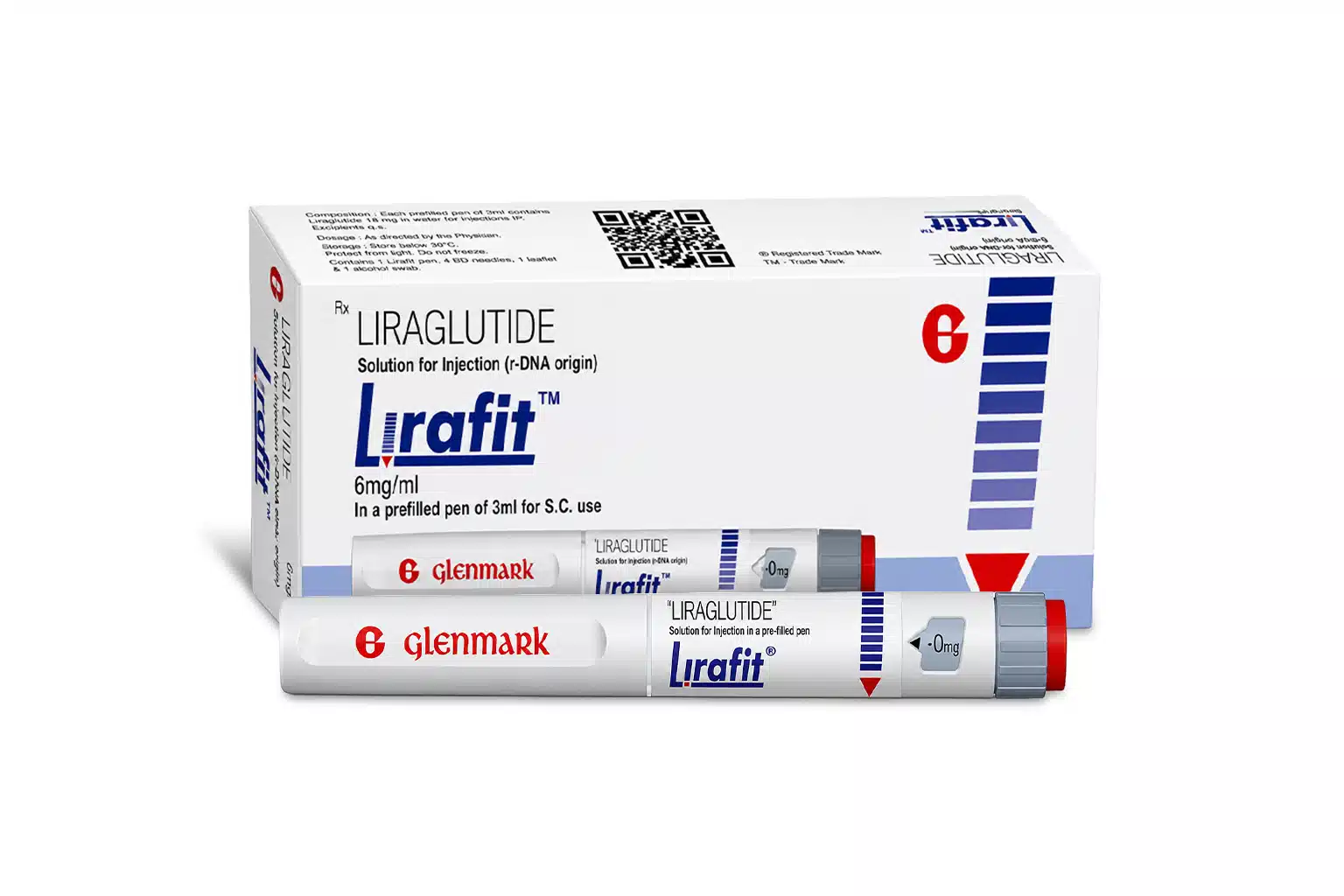
Lirafit solution for injection consists of liraglutide which is a glucagon-like peptide receptor agonist. It is usually prescribed for type-2 diabetes management, cardiovascular risk reduction and weight loss. It helps to induce and sustain weight loss in patients with obesity.
Key Features
| Category | Details |
|---|---|
| Drug Class | Incretin Mimetics |
| Chemical Class | Glucagon-Like Peptide-1 (GLP-1) Receptor Agonist |
| Product Details | |
|---|---|
| Active Ingredient | Liraglutide |
| Formulation | Sterile Aqueous Solution |
| Dosage | 6 mg |
| Used for | Weight loss |
| Onset of action | Within hours |
| Duration of Action | 24 hours |
| Manufacturer | Glenmark Pharmaceuticals Ltd. |
| Shelf Life | 24–30 months |
| Country of Origin | India |
| Storage Instructions | Store between 35.4-46.4℉. Do not freeze. |
How does the Lirafit solution work?
Liraglutide is a GLP-1 receptor agonist. The four primary mechanism are:
- Appetite suppression: It targets the area of the brain that regulates hunger, increases the feeling of fullness and drastically affects food cravings.
- Delayed gastric emptying: Liraglutide slows down the rate at which food leaves your stomach.
- Blood sugar regulation: It stimulates the pancreas to regulate insulin and prevents the liver from producing excess sugar.
Directions for use
Take this solution for injection as directed by the physician. It should be taken under the skin of the thigh, abdomen or upper arm. Do not use the injection with other people.
Dosage
Missed dose
In case if you miss the prescribed dose it can lead to increased blood sugar levels and can increase the risk of getting other health complications. If you miss a dose, take the dose as soon as you remember. If it’s already time for the next dose, skip the dose.
Overdose
An overdose of the solution can lead to severe nausea, vomiting, diarrhea and excessively low blood sugar levels. In case of overdose, consult a healthcare provider immediately.
Uses
Lirafit solution for injection is used for:
- Type 2 diabetes
- Weight management
- Reduces risk of cardiovascular risks
Side effects
- Diarrhea
- Constipation
- Low blood sugar (severe)
- Fatigue
- Rashes
- Headache
- Decreased appetite
- Kidney problems (severe)
- Severe allergic reactions
Interactions
- Sulfonylureas
Medications like glimepiride or glipizide carry a higher risk when combined with liraglutide.
- Other GLP-1 agonists
Con-combinant use of two GLP-1 agonists can lead to hypoglycemia.
- Narrow therapeutic index drugs
Medications like digoxin or blood thinners like warfarin require careful monitoring because even minor absorption changes can lead to complications.
- Medications like corticosteroids, antipsychotics, and beta-blockers can reduce the effectiveness of liraglutide by reducing blood sugar levels.
Precautions & Warnings
- Do not use this medication if you or your family has a history of Medullary Thyroid Carcinoma(MTC) or Multiple Endocrine Neoplasia syndrome type 2.
- Do not use the medication if you are allergic to liraglutide or any other ingredient of the injection.
- Never share needles or injection pens with anyone even if the needle is changed.
- Do not inject the injection in muscles or veins.
- Discard the solution if it is cloudy or discolored.
- Store unopened pens or solutions in the refrigerator but do not freeze.
- Do not use the medication if you are pregnant as the medication can harm the baby.
- Liraglutide should not be combined with insulin as a mixture for injection.
Conclusion
Lirafit Solution for Injection is a GLP-1 receptor agonist that contains liraglutide. The injection helps in managing type 2 diabetes, supports weight management, and reduces the risk of cardiovascular complications. The injection should be used exactly as prescribed by a healthcare professional, along with a healthy diet and regular physical activity. For safe and effective use of the injection, regular medical monitoring is recommended.
James –
This is in my holy grail. My sweet treat cravings have completely stopped