
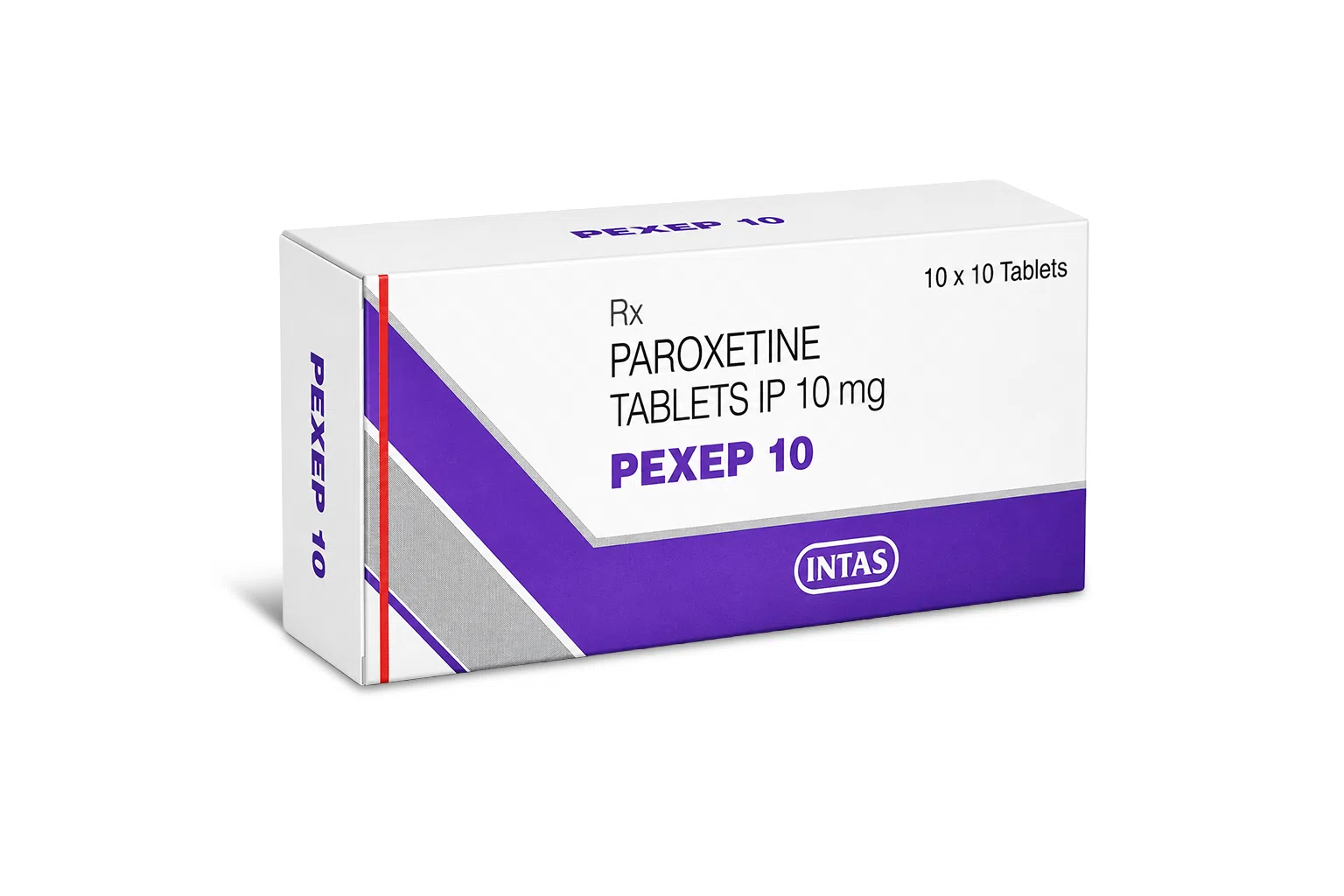
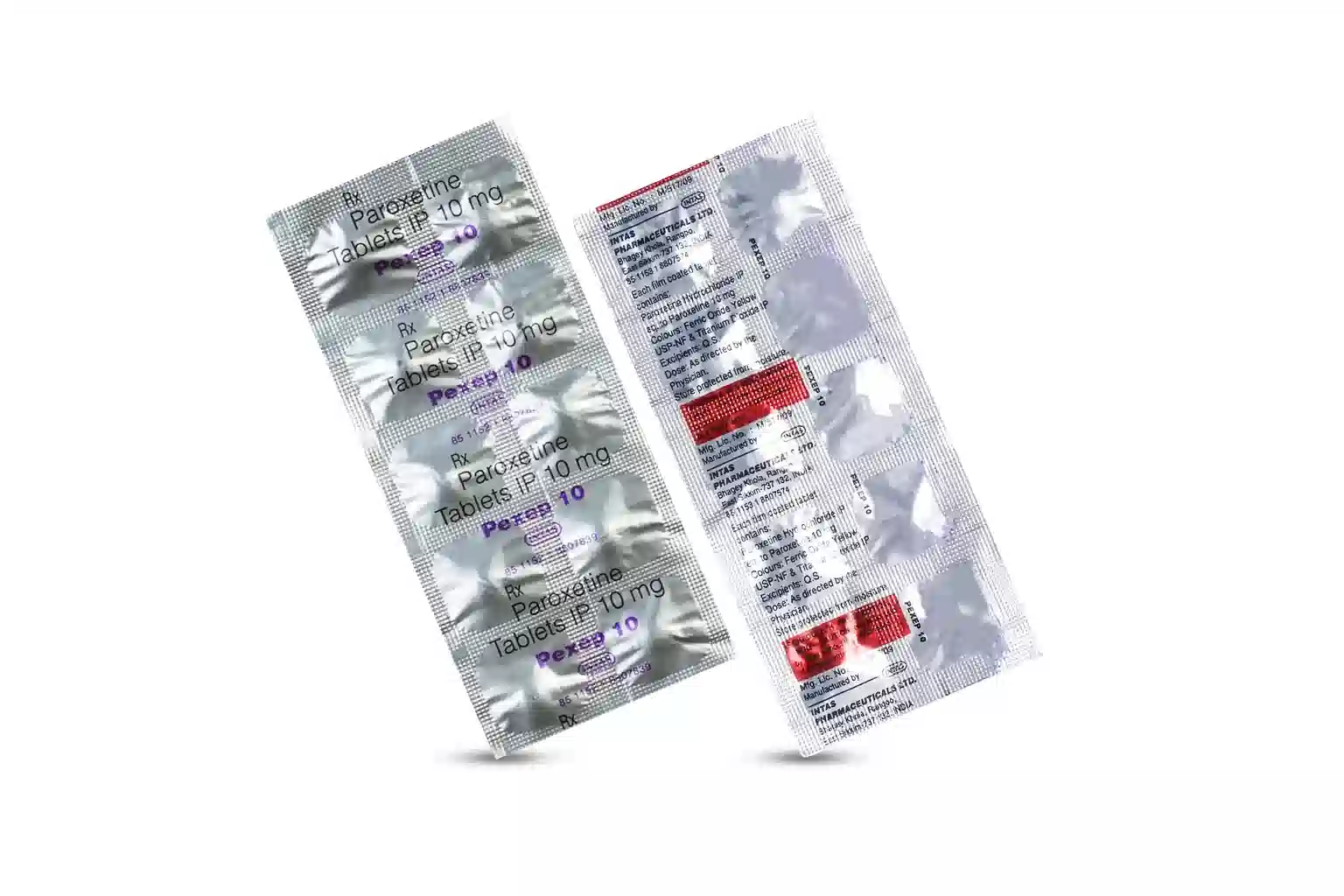
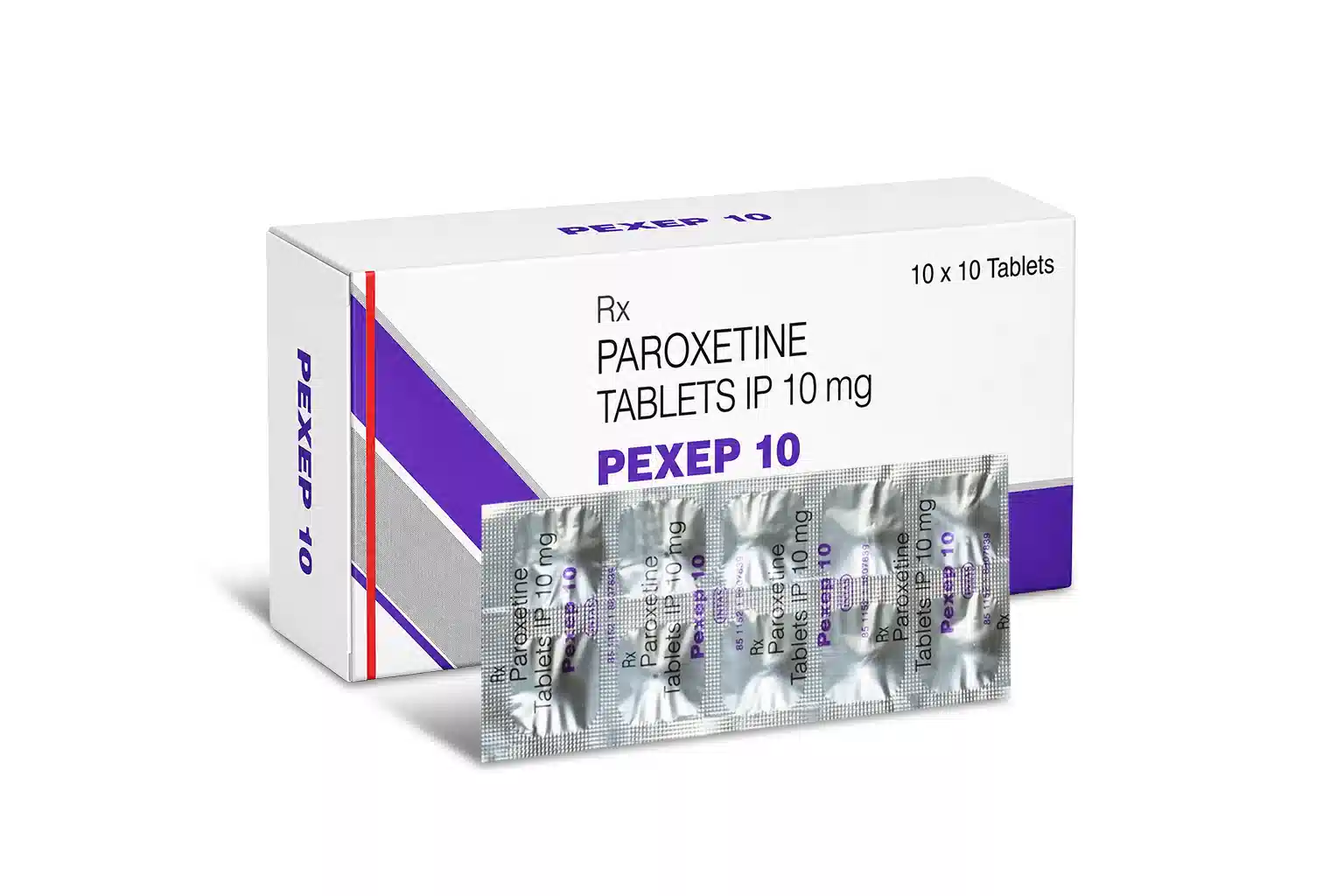
Paxep 10 Tablet is an antidepressant medicine that contains paroxetine in a controlled-release form and belongs to the group of medicines called selective serotonin reuptake inhibitors (SSRIs). A medical professional recommends it for the treatment of some mental health conditions such as depression, anxiety disorders and it is also used in dealing with premature ejaculation. Do not stop taking this medicine suddenly, as it may cause withdrawal symptoms like mood changes, irritability, dizziness, confusion, sleep disturbances etc.
Key Features
| About | |
|---|---|
| Product | Pexep 10 Tablet |
| Drug Class | Selective serotonin reuptake inhibitor (SSRI) |
| Common Generic Name | Paroxetine |
| Product Details | |
|---|---|
| Composition | Active Ingredients: Paroxetine |
| Packaging Type | Strip pack |
| Pack Size | 10*10 |
| Dosage | 10 Mg |
| Shelf Life | 24 to 36 months (2 to 3 years) from its date of manufacture. |
| Storage | Store at a temperature not exceeding 30°C, protected from light and moisture. |
How does the Pexep 10 Tablet work?
Pexep 10 Tablet (Paroxetine) works by reducing the reabsorption of serotonin by nerve cells in the brain. This leaves more serotonin available to nerve cells which may help improve communication in brain pathways linked with mood and anxiety.
Put simply, the medicine does not create artificial happiness or work like a sedative. Instead, with regular use, it may help reduce persistent low mood, excessive worry, panic symptoms, irritability and loss of interest in daily activities. The response is gradual, so consistent use matters.
Usage
Pexep 10 Tablet is used to treat various conditions. It is commonly recommended for depression, panic disorder and anxiety disorder. This medication is effective in addressing symptoms associated with these mental health conditions.
When prescribed by a healthcare professional Pexep 10 Tablet can help manage and alleviate the symptoms of depression, panic disorder and anxiety disorder and it is also used in dealing with premature ejaculation.
It is important to follow the dosages and recommendations provided by the healthcare provider to obtain the best results in treating these conditions.
Dosage
Take the Pexep 10 Tablet exactly as recommended by your doctor.
- It is usually taken once daily, often in the morning, with or without food
- Swallow the tablet whole with water
- Do not crush, chew or split the controlled-release tablet, as this can affect how the medicine is released
- Try to take it at the same time each day
- Continue treatment for the duration advised, even if you begin to feel better
- Do not stop Pexep 10 suddenly without medical guidance
If you miss a dose, take it when you remember unless it is nearly time for the next dose. Do not take two doses together to make up for a missed tablet.
Side effects
Like other SSRIs, Pexep 10 Tablet can cause side effects, although not everyone experiences them. Common effects may include nausea, dry mouth, sleepiness or insomnia, sweating, dizziness, headache, reduced appetite, tremor and sexual side effects such as reduced libido or difficulty reaching orgasm.
Seek urgent medical help if there are signs of a severe allergic reaction, seizures, severe restlessness, unusual bleeding, or symptoms suggestive of serotonin syndrome, such as agitation, confusion, fever, sweating, rapid heartbeat, muscle stiffness, tremors or diarrhoea.
Young adults and people starting or changing antidepressant treatment should be monitored for worsening depression, unusual behaviour changes or suicidal thoughts.
Interactions
Pexep 10 Tablet can interact with several medicines. Tell your doctor about all prescription medicines, over-the-counter products, herbal preparations and supplements you use.
Important interactions may include:
- Blood thinners and anti-inflammatory pain medicines, such as warfarin, aspirin, ibuprofen, or naproxen, as bleeding risk may increase
- Certain antipsychotics, antiarrhythmics, and beta-blockers, as dose adjustments or monitoring may be needed
- Alcohol, which may worsen drowsiness, poor concentration, or dizziness
- Tamoxifen, because paroxetine can reduce its conversion to an active form
- MAO inhibitors, linezolid, or methylene blue; combining these with paroxetine may raise the risk of serotonin syndrome
- Other serotonergic medicines, including some migraine medicines, tramadol, lithium, and St. John’s wort
Do not start or stop any medicine while taking Pexep without checking with a healthcare professional.
Pharmacokinetics
Pexep 10 Tablet is a controlled release formulation of paroxetine which releases the drug slowly, so absorption is delayed and peak blood levels are reduced. Food does not have much effect on the absorption of this drug so it may be taken with or without food.
Paroxetine is extensively metabolized in the liver, mainly through the CYP2D6 enzyme pathway. It also inhibits CYP2D6, which may slow its own metabolism and contribute to interactions with certain medicines. The average elimination half-life is about 21 hours and steady-state levels are generally reached after 1 week of regular dosing.
Precautions
Tell the prescriber before using Pexep 10 Tablet if there is a history of bipolar disorder or mania, seizures, glaucoma, low blood sodium, bleeding problems, liver disease, kidney disease or suicidal thoughts. Paroxetine may sometimes trigger mania or hypomania in people with bipolar disorder and can contribute to low sodium levels, particularly in older adults.
Pregnancy planning, pregnancy, and breastfeeding should be discussed with a doctor before treatment starts or continues. Paroxetine has specific pregnancy-related safety considerations, including evidence suggesting an increased risk of cardiovascular malformations with first-trimester exposure. Treatment decisions should balance this risk with the risks of untreated illness.
Do not drive, operate machinery or do anything else that could be dangerous until you know how Pexep 10 Tablet affects you. Drowsiness or dizziness may occur especially early in treatment.
Conclusion
Pexep 10 Tablet contains paroxetine controlled-release, an SSRI antidepressant used for depression and selected anxiety-related conditions. It may support improvement in mood and anxiety symptoms when taken regularly as prescribed but it should be used with medical supervision because individual response, side effects and medicine interactions can vary.
Reviews
There are no reviews yet.